
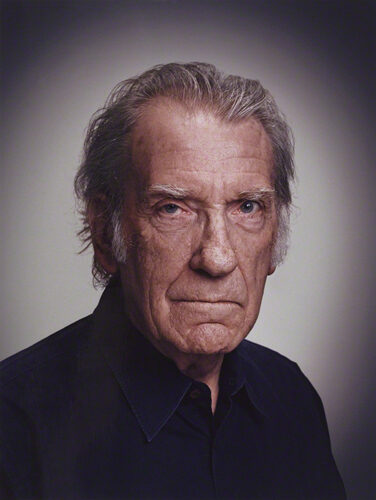
David Warner
David Warner was a British actor. Born July 29, 1941, in Manchester. Died July 24, 2022, in Northwood. Educated at Royal Academy of Dramatic Art. Awards include Theatre World Award, Saturn Awards and Primetime Emmy Award for Outstanding Supporting Actor in a Miniseries or a Movie.
Facts
18 facts · 2 confirmed by two sources · 9 cited · 7 from one source
Where this comes from
Papalocal keeps its own record. It started from these sources; what each one said is kept here as it was copied, so a change on their side never changes this page by itself. Tap one to read its version.
What Wikidata says · copied November 16, 2026 · revision 2565953777
- Described as
- British actor (1941–2022)
- Other names
- David Hattersley Warner
- Born
- July 29, 1941 · 6 references
- Died
- July 24, 2022 · 2 references
- Born in
- Manchester · 2 references
- Died in
- Northwood · 1 reference
- Cause of death
- cancer · 1 reference
- Name at birth
- David Hattersley Warner
- Citizen of
- United Kingdom
- Occupation
- stage actor; film actor · 1 reference; television actor; actor · 2 references; video game actor · 1 reference; voice actor · 1 reference
- Education
- Royal Academy of Dramatic Art (–1961) · 1 reference
- Awards
- Theatre World Award (2002) · 1 reference; Saturn Awards · 1 reference; Primetime Emmy Award for Outstanding Supporting Actor in a Miniseries or a Movie (1981)
- Website
- https://www.davidwarnerfilm.co.uk/
- Wikipedias with a page
- 48
Wikidata item Q363271 (wikidata.org/wiki/Q363271), public domain (CC0). Copied November 16, 2026.
What Wikipedia says · copied November 16, 2026 · revision 1384137389
David Hattersley Warner (29 July 1941 – 24 July 2022) was an English actor who portrayed a variety of villainous characters, as well as more sympathetic roles, in a career spanning six decades across stage and screen. His accolades include a Primetime Emmy Award and nominations for a BAFTA Award and a Screen Actors Guild Award.
Warner trained at the Royal Academy of Dramatic Art before joining the Royal Shakespeare Company (RSC), with whom he made his stage debut in 1962 and, in 1964, played Henry VI in the Wars of the Roses cycle at the West End's Aldwych Theatre. The RSC then cast him as Prince Hamlet in Peter Hall's 1965 production of Hamlet. Warner made his Broadway debut in the 2001 revival of Major Barbara.
He gained prominence as the lead in the film Morgan: A Suitable Case for Treatment (Karel Reisz, 1966), for which he was nominated for the BAFTA Award for Best Actor in a Leading Role. His other roles include those in The Omen (1976), Time After Time (1979), Time Bandits (1981), The French Lieutenant's Woman (1981), Tron (1982), A Christmas Carol (1984), Seven Servants (1996), Titanic (1997), Scream 2 (1997), Ladies in Lavender (2002), and Mary Poppins Returns (2018). He is also known for his roles in the films Star Trek V: The Final Frontier (1989) and Star Trek VI: The Undiscovered Country (1991).
For his work in television, Warner received two Primetime Emmy Award for Outstanding Supporting Actor in a Miniseries or TV Movie nominations, for his portrayals of Reinhard Heydrich in the NBC miniseries Holocaust (1978) and Pomponius Falco in the ABC miniseries Masada (1981); he won for the latter.
- Born, in its opening lines
- July 29, 1941
- Died, in its opening lines
- July 24, 2022
From the Wikipedia article “David Warner (actor)” (en.wikipedia.org/wiki/David_Warner_(actor)), by its contributors, under CC BY-SA 4.0 (creativecommons.org/licenses/by-sa/4.0/). Copied November 16, 2026; not changed.
Confirmed Two sources agree. Cited One source, and it names where it got it. One source One source, without a reference of its own. Sources disagree The sources disagree. We show the best-supported value and keep theirs below.
