
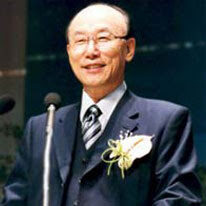
David Yonggi Cho
David Yonggi Cho was a South Korean minister. Born February 14, 1936, in Ulsan. Died September 14, 2021, in Seoul. Educated at Hansei University.
Facts
14 facts · 2 confirmed by two sources · 5 cited · 7 from one source
Where this comes from
Papalocal keeps its own record. It started from these sources; what each one said is kept here as it was copied, so a change on their side never changes this page by itself. Tap one to read its version.
What Wikidata says · copied November 18, 2026 · revision 2567399632
- Described as
- South Korean minister (1936-2021)
- Other names
- Cho Yong-gi
- Born
- February 14, 1936 · 3 references
- Died
- September 14, 2021 · 2 references
- Born in
- Ulsan · 1 reference
- Died in
- Seoul · 1 reference
- Citizen of
- South Korea
- Occupation
- pastor; evangelist · 1 reference; missionary · 1 reference; parson · 1 reference
- Education
- Hansei University
- Spouse
- Kim Sung Hye
- Children
- Cho Hee-jun
- Religion
- Pentecostalism
- Website
- http://davidcho.fgtv.com/
- Wikipedias with a page
- 20
Wikidata item Q482817 (wikidata.org/wiki/Q482817), public domain (CC0). Copied November 18, 2026.
What Wikipedia says · copied November 18, 2026 · revision 1383222864
David Yonggi Cho (Korean: 조용기; 14 February 1936 – 14 September 2021 as David Yungi Cho) was a South Korean Pentecostal Pastor. He was the founder of the Yoido Full Gospel Church (Assemblies of God), which he started in a tent with 5 people (including his future mother-in-law Choi Ja-shil and her children as its first members), which eventually became the world's largest congregation, with a membership of 830,000 (as of 2007).
- Born, in its opening lines
- February 14, 1936
- Died, in its opening lines
- September 14, 2021
From the Wikipedia article “David Yonggi Cho” (en.wikipedia.org/wiki/David_Yonggi_Cho), by its contributors, under CC BY-SA 4.0 (creativecommons.org/licenses/by-sa/4.0/). Copied November 18, 2026; not changed.
Confirmed Two sources agree. Cited One source, and it names where it got it. One source One source, without a reference of its own. Sources disagree The sources disagree. We show the best-supported value and keep theirs below.
