
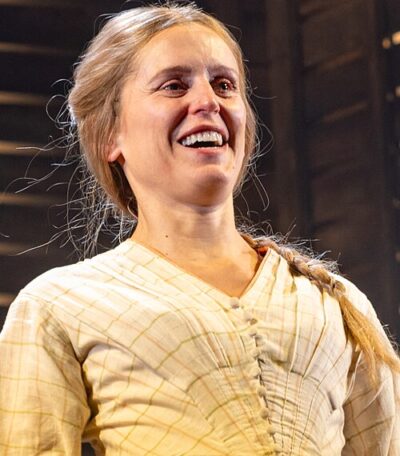
Denise Gough
Denise Gough is an Irish actress. Born February 28, 1980, in Ennis. Educated at Academy of Live and Recorded Arts. Awards include Laurence Olivier Award for Best Actress.
Facts
10 facts · 1 confirmed by two sources · 3 cited · 6 from one source
Where this comes from
Papalocal keeps its own record. It started from these sources; what each one said is kept here as it was copied, so a change on their side never changes this page by itself. Tap one to read its version.
What Wikidata says · copied November 18, 2026 · revision 2557359072
- Described as
- Irish actress
- Born
- February 28, 1980 · 2 references
- Born in
- Ennis · 1 reference
- Citizen of
- Ireland
- Occupation
- actor · 1 reference; film actor; stage actor · 1 reference
- Education
- Academy of Live and Recorded Arts
- Awards
- Laurence Olivier Award for Best Actress · 1 reference
- Field
- acting · 1 reference
- Siblings
- Kelly Gough
- Wikipedias with a page
- 21
Wikidata item Q5257674 (wikidata.org/wiki/Q5257674), public domain (CC0). Copied November 18, 2026.
What Wikipedia says · copied November 18, 2026 · revision 1383242296
Denise Gough ( GOF; born 28 February 1980) is an Irish actress. Recognised for her performances on stage and screen, she has received numerous accolades, including two Laurence Olivier Awards as well as nominations for a Tony Award and a British Academy Television Award.
On television, she is best known for her roles in the BBC Two crime drama Paula (2017), the ITV miniseries Too Close (2021), and the Disney+ series Andor (2022–2025). Her films include Colette (2018), The Other Lamb (2019), Monday (2020), and Martyrs Lane (2021).
- Born, in its opening lines
- February 28, 1980
From the Wikipedia article “Denise Gough” (en.wikipedia.org/wiki/Denise_Gough), by its contributors, under CC BY-SA 4.0 (creativecommons.org/licenses/by-sa/4.0/). Copied November 18, 2026; not changed.
Confirmed Two sources agree. Cited One source, and it names where it got it. One source One source, without a reference of its own. Sources disagree The sources disagree. We show the best-supported value and keep theirs below.
