
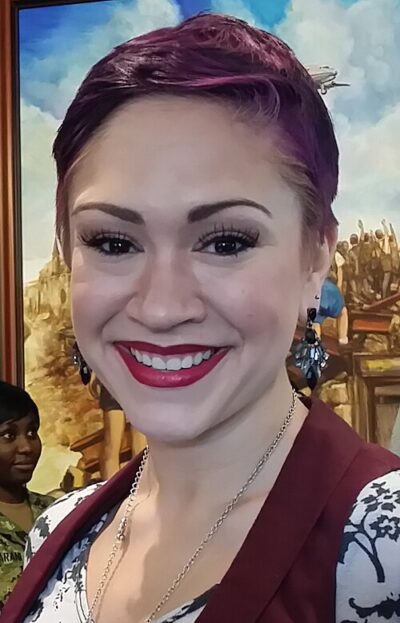
Diana DeGarmo is an American singer. Born June 16, 1987, in Birmingham. Educated at Shiloh High School.
Facts
16 facts · 1 confirmed by two sources · 0 cited · 15 from one source
Where this comes from
Papalocal keeps its own record. It started from these sources; what each one said is kept here as it was copied, so a change on their side never changes this page by itself. Tap one to read its version.
What Wikidata says · copied November 18, 2026 · revision 2561835189
- Described as
- American singer
- Other names
- Diana Nicole DeGarmo
- Born
- June 16, 1987 · 1 reference
- Born in
- Birmingham
- Citizen of
- United States
- Occupation
- singer-songwriter; singer; actor; stage actor
- Education
- Shiloh High School · 1 reference
- Genre
- country music
- Instrument
- voice
- Record label
- 19 Recordings; RCA Records
- Field
- music composing
- Spouse
- Ace Young (2013–) · 1 reference
- Lived in
- Snellville
- Website
- https://www.dianadegarmo.com/
- Wikipedias with a page
- 18
Wikidata item Q464246 (wikidata.org/wiki/Q464246), public domain (CC0). Copied November 18, 2026.
What Wikipedia says · copied November 18, 2026 · revision 1386065688
Diana Nicole DeGarmo (born June 16, 1987) is an American singer. She rose to fame in 2004 as the runner-up of the third season of American Idol, releasing her debut studio album, Blue Skies, later that year. The following year, DeGarmo ventured into a career in musical theatre. She has starred in two Broadway, one off-Broadway and three national tours. She made her television acting debut in a six-month arc as Angelina Veneziano on The Young and the Restless. DeGarmo has since released two extended plays, Unplugged in Nashville (2009) and Live to Love (2012). She is married to fifth season American Idol finalist Ace Young.
- Born, in its opening lines
- June 16, 1987
From the Wikipedia article “Diana DeGarmo” (en.wikipedia.org/wiki/Diana_DeGarmo), by its contributors, under CC BY-SA 4.0 (creativecommons.org/licenses/by-sa/4.0/). Copied November 18, 2026; not changed.
Confirmed Two sources agree. Cited One source, and it names where it got it. One source One source, without a reference of its own. Sources disagree The sources disagree. We show the best-supported value and keep theirs below.
