
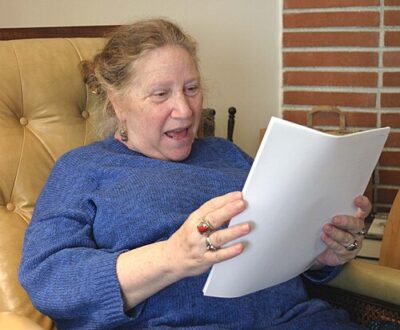
Diane di Prima
Diane di Prima was an American poet. Born August 6, 1934, in Brooklyn. Died October 25, 2020, in San Francisco. Educated at Swarthmore College and Hunter College High School.
Facts
16 facts · 2 confirmed by two sources · 6 cited · 8 from one source
Where this comes from
Papalocal keeps its own record. It started from these sources; what each one said is kept here as it was copied, so a change on their side never changes this page by itself. Tap one to read its version.
What Wikidata says · copied November 15, 2026 · revision 2565603278
- Described as
- American poet (1934-2020)
- Born
- August 6, 1934 · 4 references
- Died
- October 25, 2020 · 2 references
- Born in
- Brooklyn
- Died in
- San Francisco · 1 reference
- Citizen of
- United States
- Occupation
- poet · 1 reference; translator; writer · 1 reference; autobiographer · 1 reference
- Worked for
- Naropa University
- Education
- Swarthmore College; Hunter College High School · 1 reference
- Field
- poetry · 1 reference; autobiography · 1 reference; translating activity · 1 reference
- Children
- Dominique di Prima
- Wikipedias with a page
- 29
Wikidata item Q438891 (wikidata.org/wiki/Q438891), public domain (CC0). Copied November 15, 2026.
What Wikipedia says · copied November 15, 2026 · revision 1378638018
Diane di Prima (August 6, 1934 – October 25, 2020) was an American poet, known for her association with the Beat movement. She was also an artist, prose writer, and teacher. Her magnum opus is widely considered to be Loba, a collection of poems first published in 1978 then extended in 1998.
- Born, in its opening lines
- August 6, 1934
- Died, in its opening lines
- October 25, 2020
From the Wikipedia article “Diane di Prima” (en.wikipedia.org/wiki/Diane_di_Prima), by its contributors, under CC BY-SA 4.0 (creativecommons.org/licenses/by-sa/4.0/). Copied November 15, 2026; not changed.
Confirmed Two sources agree. Cited One source, and it names where it got it. One source One source, without a reference of its own. Sources disagree The sources disagree. We show the best-supported value and keep theirs below.
