
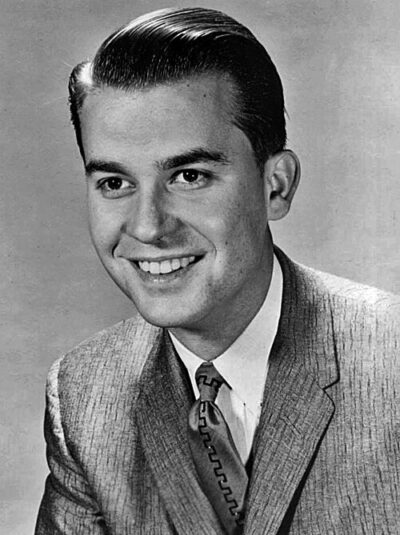
Dick Clark
Dick Clark was an American radio and television personality. Born November 30, 1929, in Mount Vernon. Died April 18, 2012, in Providence Saint John's Health Center. Known for American Bandstand, Pyramid and Dick Clark's New Year's Rockin' Eve. Educated at Mount Vernon High School and Syracuse University. Awards include Daytime Emmy Award for Outstanding Game Show Host, Peabody Awards and Grammy Trustees Award.
Facts
34 facts · 2 confirmed by two sources · 2 cited · 30 from one source
Where this comes from
Papalocal keeps its own record. It started from these sources; what each one said is kept here as it was copied, so a change on their side never changes this page by itself. Tap one to read its version.
What Wikidata says · copied November 15, 2026 · revision 2549532459
- Described as
- American radio and television personality (1929–2012)
- Other names
- Richard Wagstaff Clark
- Born
- November 30, 1929 · 5 references
- Died
- April 18, 2012 · 7 references
- Born in
- Mount Vernon
- Died in
- Providence Saint John's Health Center
- Buried in
- Pacific Ocean
- Cause of death
- myocardial infarction
- Name at birth
- Richard Wagstaff Clark
- Citizen of
- United States
- Occupation
- actor; businessperson; film producer; screenwriter; radio personality; television producer; game show host; presenter · 1 reference
- Education
- Mount Vernon High School · 1 reference; Syracuse University
- Member of
- Delta Kappa Epsilon
- Known for
- American Bandstand (1952–1989); Pyramid (1973–1988); Dick Clark's New Year's Rockin' Eve (1972–2004)
- Awards
- Daytime Emmy Award for Outstanding Game Show Host (1979); Peabody Awards; Grammy Trustees Award (1990); Disney Legends (2013) · 1 reference; star on Hollywood Walk of Fame · 1 reference; Radio Hall of Fame (1990); Television Hall of Fame (1992); Rock and Roll Hall of Fame (1993) · 1 reference
- Children
- Duane Clark
- Mother
- Julia Fuller Clark · 1 reference
- Nickname
- The World's Oldest Teacher
- Height
- 1.75 m (5 ft 9 in)
- Wikipedias with a page
- 35
Wikidata item Q366563 (wikidata.org/wiki/Q366563), public domain (CC0). Copied November 15, 2026.
What Wikipedia says · copied November 15, 2026 · revision 1383321908
Richard Wagstaff Clark (November 30, 1929 – April 18, 2012) was an American television and radio personality and television producer who hosted American Bandstand from 1956 to 1989. He also hosted five incarnations of the Pyramid game show from 1973 to 1988 and Dick Clark's New Year's Rockin' Eve, which broadcast New Year's Eve celebrations in New York City's Times Square.
As host of American Bandstand, Clark introduced rock and roll to many Americans. The show gave many new music artists their first exposure to national audiences, including the Supremes, Ike & Tina Turner, Smokey Robinson and the Miracles, Stevie Wonder, Simon & Garfunkel, Iggy Pop, Prince, Talking Heads and Madonna. Episodes he hosted were among the first in which black people and white people performed on the same stage, and they were among the first in which the live studio audience sat down together without racial segregation. Singer Paul Anka claimed that Bandstand was responsible for creating a "youth culture". Due to his perennially youthful appearance and his largely teenaged audience of American Bandstand, Clark was often referred to as "America's oldest teenager" or "the world's oldest teenager".
In his off-stage roles, Clark was chief executive officer of Dick Clark Productions (though he sold his financial interest in the company during his later years). He also founded the American Bandstand Diner, a restaurant chain themed after the television program of the same name. In 1973, he created and produced the annual American Music Awards show, similar to the Grammy Awards.
- Born, in its opening lines
- November 30, 1929
- Died, in its opening lines
- April 18, 2012
From the Wikipedia article “Dick Clark” (en.wikipedia.org/wiki/Dick_Clark), by its contributors, under CC BY-SA 4.0 (creativecommons.org/licenses/by-sa/4.0/). Copied November 15, 2026; not changed.
Confirmed Two sources agree. Cited One source, and it names where it got it. One source One source, without a reference of its own. Sources disagree The sources disagree. We show the best-supported value and keep theirs below.
