
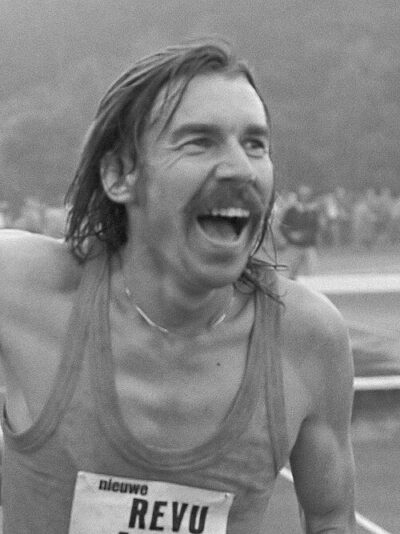
Dick Quax
Dick Quax was a New Zealand athlete. Born January 1, 1948, in Alkmaar. Died May 28, 2018, in Auckland. Educated at Hamilton Boys' High School.
Facts
13 facts · 2 confirmed by two sources · 0 cited · 11 from one source
Where this comes from
Papalocal keeps its own record. It started from these sources; what each one said is kept here as it was copied, so a change on their side never changes this page by itself. Tap one to read its version.
What Wikidata says · copied November 17, 2026 · revision 2550404895
- Described as
- New Zealand athlete (1948–2018)
- Other names
- Theodorus Jacobus L. Quax, Theodorus Jacobus Leonardus Quax
- Born
- January 1, 1948 · 1 reference
- Died
- May 28, 2018 · 1 reference
- Born in
- Alkmaar
- Died in
- Auckland
- Cause of death
- laryngeal cancer
- Citizen of
- New Zealand
- Occupation
- long-distance runner; middle-distance runner; politician
- Political party
- ACT New Zealand
- Education
- Hamilton Boys' High School
- Sport
- athletics
- Height
- 1.83 m (6 ft 0 in)
- Wikipedias with a page
- 24
Wikidata item Q944881 (wikidata.org/wiki/Q944881), public domain (CC0). Copied November 17, 2026.
What Wikipedia says · copied November 17, 2026 · revision 1385793472
Theodorus Jacobus Leonardus Quax (1 January 1948 – 28 May 2018), known as Dick Quax, was a Dutch-born New Zealand runner, one-time world record holder in the 5000 metres, and local-body politician.
Quax stood for Parliament for the ACT Party in 1999 and 2002. He was a Manukau City councillor from 2001 to 2007, when he stood unsuccessfully for mayor, and was a councillor on the Auckland Council from 2011 until his death in 2018.
- Born, in its opening lines
- January 1, 1948
- Died, in its opening lines
- May 28, 2018
From the Wikipedia article “Dick Quax” (en.wikipedia.org/wiki/Dick_Quax), by its contributors, under CC BY-SA 4.0 (creativecommons.org/licenses/by-sa/4.0/). Copied November 17, 2026; not changed.
Confirmed Two sources agree. Cited One source, and it names where it got it. One source One source, without a reference of its own. Sources disagree The sources disagree. We show the best-supported value and keep theirs below.
