
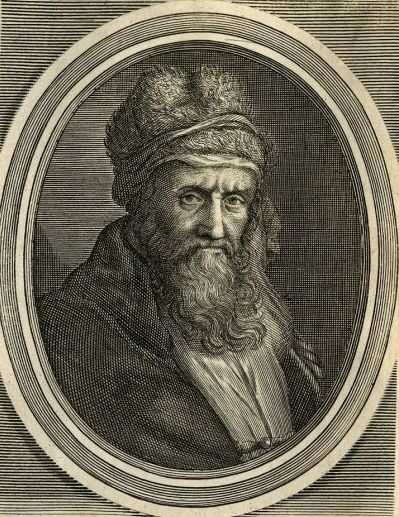
Diogenes Laërtius
Diogenes Laërtius was the 3rd-century Roman biographer of Greek philosophers. Known for Lives and Opinions of Eminent Philosophers.
Facts
7 facts · 0 confirmed by two sources · 0 cited · 7 from one source
Where this comes from
Papalocal keeps its own record. It started from these sources; what each one said is kept here as it was copied, so a change on their side never changes this page by itself. Tap one to read its version.
What Wikidata says · copied November 16, 2026 · revision 2568981039
- Described as
- 3rd-century Roman biographer of Greek philosophers
- Other names
- Diogenes Laertius
- Citizen of
- Ancient Rome
- Occupation
- historian; biographer; philosopher; philosophy historian
- Known for
- Lives and Opinions of Eminent Philosophers
- Field
- philosophy
- Wikipedias with a page
- 68
Wikidata item Q59138 (wikidata.org/wiki/Q59138), public domain (CC0). Copied November 16, 2026.
What Wikipedia says · copied November 16, 2026 · revision 1365833378
Diogenes Laërtius ( dy-OJ-in-eez lay-UR-shee-əs; Ancient Greek: Διογένης Λαέρτιος, romanized: Diogénēs Laértios, IPA: [di.o.ɡé.nɛːs laː.ér.ti.os]; fl. 3rd century CE) was a biographer of the Greek philosophers. Little is definitively known about his life, but his surviving work, Lives and Opinions of Eminent Philosophers, remains a primary source for the history of ancient Greek philosophy. His reputation is controversial among scholars because he often repeats information from his sources without critically evaluating it. In many cases, he focuses on insignificant details of his subjects' lives while ignoring important details of their philosophical teachings and he sometimes fails to distinguish between earlier and later teachings of specific philosophical schools. However, unlike many other ancient secondary sources, Diogenes Laërtius tends to report philosophical teachings without trying to reinterpret or expand on them, and so his accounts are often closer to the primary sources. Due to the loss of so many of the primary sources on which Diogenes relied, his work has become the foremost surviving source on the history of Greek philosophy.
From the Wikipedia article “Diogenes Laertius” (en.wikipedia.org/wiki/Diogenes_Laertius), by its contributors, under CC BY-SA 4.0 (creativecommons.org/licenses/by-sa/4.0/). Copied November 16, 2026; not changed.
Confirmed Two sources agree. Cited One source, and it names where it got it. One source One source, without a reference of its own. Sources disagree The sources disagree. We show the best-supported value and keep theirs below.
