
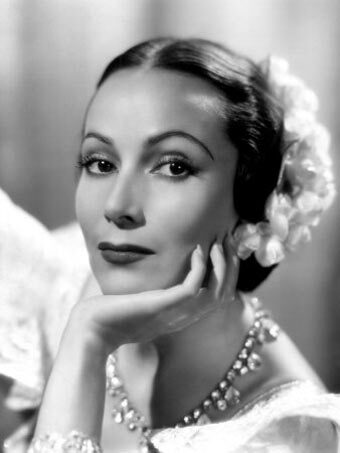
Dolores del Río
Dolores del Río was a Mexican actress. Born August 3, 1904, in Victoria de Durango. Died April 11, 1983, in Newport Beach. Awards include Ariel Award for Best Actress (3 times), Golden Ariel and star on Hollywood Walk of Fame.
Facts
22 facts · 2 confirmed by two sources · 7 cited · 13 from one source
Where this comes from
Papalocal keeps its own record. It started from these sources; what each one said is kept here as it was copied, so a change on their side never changes this page by itself. Tap one to read its version.
What Wikidata says · copied November 16, 2026 · revision 2569062025
- Described as
- Mexican actress (1904–1983)
- Other names
- María de los Dolores Asúnsolo y López Negrete
- Born
- August 3, 1904 · 2 references
- Died
- April 11, 1983 · 5 references
- Born in
- Victoria de Durango
- Died in
- Newport Beach · 3 references
- Buried in
- Rotonda de las Personas Ilustres
- Cause of death
- liver failure
- Name at birth
- María de los Dolores Asúnsolo y López Negrete
- Citizen of
- Mexico · 1 reference
- Occupation
- actor · 1 reference; film actor · 1 reference; stage actor; television actor; singer · 1 reference
- Worked for
- Warner Bros. Entertainment
- Instrument
- voice
- Awards
- Ariel Award for Best Actress (3 times) (1946, 1952, 1954); Golden Ariel (1975); star on Hollywood Walk of Fame · 1 reference
- Spouse
- Cedric Gibbons (1930–1941)
- Father
- Jesús Leonardo Asúnsolo Jacques · 1 reference
- Mother
- Antonia López-Negrete · 1 reference
- Lived in
- Durango
- Wikipedias with a page
- 51
Wikidata item Q124057 (wikidata.org/wiki/Q124057), public domain (CC0). Copied November 16, 2026.
What Wikipedia says · copied November 16, 2026 · revision 1381364075
Dolores del Río (born María de los Dolores Asúnsolo y López Negrete; 3 August 1904 – 11 April 1983) was a Mexican actress whose career spanned more than 50 years. Along with a notable movie career in the Golden Age of Hollywood during the 1920s and 1930s, she was considered one of the most important female figures in the Golden Age of Mexican cinema during the 1940s and 1950s, as well as one of the most beautiful actresses of the era. Regarded as the first major female Latin American crossover superstar in Hollywood, she is a quintessential representation of the female face of Mexico in the world. For her contribution to the film industry, she has a star on the Hollywood Walk of Fame.
Del Río was born in Victoria de Durango into a wealthy and aristocratic Mexican family of Spanish ancestry. After being discovered by an American director in Mexico City, she relocated to Los Angeles and made her screen debut in the romantic comedy film Joanna (1925). Del Río subsequently starred in several box-office hits such as What Price Glory (1926), Resurrection (1927), Ramona (1928), and Evangeline (1929). At the peak of her fame in the silent era, she came to be considered a sort of feminine version of Rudolph Valentino, a 'female Latin Lover'. With the advent of talkies, she acted in a range of genres, from contemporary crime melodramas to musical comedies and romantic dramas. Del Río's most successful films of that decade include The Bad One (1930), Bird of Paradise (1932), Flying Down to Rio (1933), and Madame Du Barry (1934). By the end of the 1930s, she was labeled "box office poison" and her movie career soon began to decline. In the early 1940s, she returned to her native country and naturally joined the Mexican film industry, which at that time was at its peak. Del Río helped boost Mexican cinema worldwide, becoming one of the most popular actresses of the Golden Age of Mexican cinema.
Del Río's first Spanish-language film was the historical drama Flor Silvestre (1943), her first movie of an extended collaboration between Emilio "El Indio" Fernández and Pedro Armendáriz. Other well-known films in which Del Río starred in this period were María Candelaria (1944), Las Abandonadas (1945), La Otra (1946), La Malquerida (1949), La casa chica (1950), Doña Perfecta (1951), El Niño y la Niebla (1953), and La Cucaracha (1959). For her work in Las Abandonadas, Doña Perfecta, and El Niño y la Niebla, Del Río won the Ariel Award for Best Actress. Over time, she was cast in Hollywood movies again, including Flaming Star (1960) and Cheyenne Autumn (1964), but the federal government of the United States accused her of being a communist sympathizer, and she was unable to accept work abroad. When the ban lifted, she returned to the U.S. to perform on stage, as well as in television. Later in life, she became known for her work promoting the arts and for her philanthropic endeavors. Del Río's final screen appearance was in the drama film The Children of Sanchez (1978).
- Born, in its opening lines
- August 3, 1904
- Died, in its opening lines
- April 11, 1983
From the Wikipedia article “Dolores del Río” (en.wikipedia.org/wiki/Dolores_del_Río), by its contributors, under CC BY-SA 4.0 (creativecommons.org/licenses/by-sa/4.0/). Copied November 16, 2026; not changed.
Confirmed Two sources agree. Cited One source, and it names where it got it. One source One source, without a reference of its own. Sources disagree The sources disagree. We show the best-supported value and keep theirs below.
