
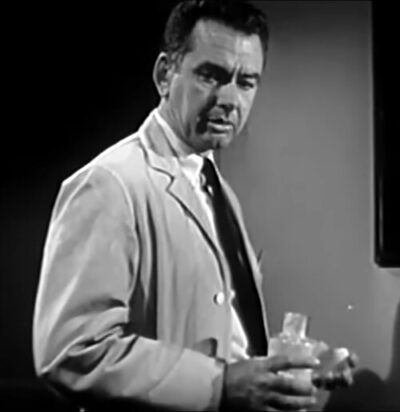
Don Keefer
Don Keefer was an American actor. Born August 18, 1916, in Highspire. Died September 7, 2014, in Sherman Oaks.
Facts
9 facts · 2 confirmed by two sources · 1 cited · 6 from one source
Where this comes from
Papalocal keeps its own record. It started from these sources; what each one said is kept here as it was copied, so a change on their side never changes this page by itself. Tap one to read its version.
What Wikidata says · copied November 15, 2026 · revision 2544515972
- Described as
- American actor (1916–2014)
- Other names
- Donald Keefer, D. H. Keefer, Donald H. Keefer, H. Keefer, D. Keefer, Donald Hood Keefer
- Born
- August 18, 1916 · 3 references
- Died
- September 7, 2014 · 3 references
- Born in
- Highspire
- Died in
- Sherman Oaks
- Buried in
- Woodlawn Memorial Cemetery · 1 reference
- Citizen of
- United States
- Occupation
- actor; television actor
- Lived in
- Sherman Oaks
- Wikipedias with a page
- 31
Wikidata item Q5292891 (wikidata.org/wiki/Q5292891), public domain (CC0). Copied November 15, 2026.
What Wikipedia says · copied November 15, 2026 · revision 1371201768
Donald Hood Keefer (August 18, 1916 – September 7, 2014) was an American actor known for his versatility in performing comedic, as well as highly dramatic, roles. In an acting career that spanned more than 50 years, he appeared in hundreds of stage, film, and television productions. He was a founding member of The Actors Studio, and he performed in both the original Broadway play and 1951 film versions of Arthur Miller's Death of a Salesman. His longest-lasting roles on television were in ten episodes each of Gunsmoke and Angel.
- Born, in its opening lines
- August 18, 1916
- Died, in its opening lines
- September 7, 2014
From the Wikipedia article “Don Keefer” (en.wikipedia.org/wiki/Don_Keefer), by its contributors, under CC BY-SA 4.0 (creativecommons.org/licenses/by-sa/4.0/). Copied November 15, 2026; not changed.
Confirmed Two sources agree. Cited One source, and it names where it got it. One source One source, without a reference of its own. Sources disagree The sources disagree. We show the best-supported value and keep theirs below.
