
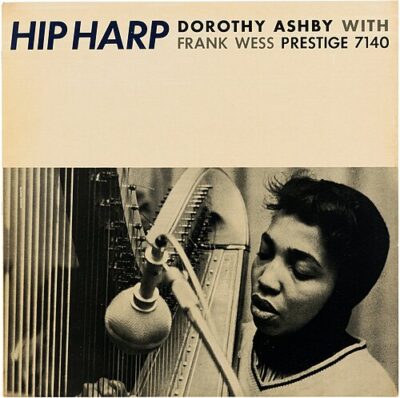
Dorothy Ashby
Dorothy Ashby was an American jazz harpist. Born August 6, 1932, in Detroit. Died April 13, 1986, in Santa Monica. Educated at Wayne State University and Cass Technical High School.
Facts
28 facts · 2 confirmed by two sources · 21 cited · 5 from one source
Where this comes from
Papalocal keeps its own record. It started from these sources; what each one said is kept here as it was copied, so a change on their side never changes this page by itself. Tap one to read its version.
What Wikidata says · copied November 18, 2026 · revision 2563752562
- Described as
- American jazz harpist (1932-1986)
- Other names
- Dorothy Jeanne Ashby, Dorothy Jeanne Thompson
- Born
- August 6, 1932 · 4 references
- Died
- April 13, 1986 · 5 references
- Born in
- Detroit · 2 references
- Died in
- Santa Monica · 2 references
- Cause of death
- cancer · 1 reference
- Name at birth
- Dorothy Jeanne Thompson · 1 reference
- Citizen of
- United States
- Occupation
- composer · 2 references; songwriter · 1 reference; jazz musician · 3 references; harpist; musician · 1 reference
- Education
- Wayne State University · 2 references; Cass Technical High School · 3 references
- Genre
- jazz · 3 references; cool jazz · 1 reference; hard bop · 1 reference
- Instrument
- harp · 2 references; koto · 2 references; piano · 1 reference; saxophone · 1 reference; double bass · 1 reference
- Record label
- Atlantic Records · 1 reference; Cadet Records · 2 references; Prestige · 1 reference; Jazzland · 1 reference; Argo Records · 1 reference; Philips Records
- Wikipedias with a page
- 17
Wikidata item Q530522 (wikidata.org/wiki/Q530522), public domain (CC0). Copied November 18, 2026.
What Wikipedia says · copied November 18, 2026 · revision 1383925263
Dorothy Jeanne Thompson (August 6, 1932 – April 13, 1986), better known as Dorothy Ashby, was an American jazz harpist, singer and composer. Hailed as one of the most "unjustly under loved jazz greats of the 1950s" and the "most accomplished modern jazz harpist", Ashby established the harp as an improvising jazz instrument, beyond earlier use as a novelty or background orchestral instrument, proving the harp could play bebop as adeptly as the instruments commonly associated with jazz, such as the saxophone or piano.
Ashby had to overcome many obstacles during the pursuit of her career. As an African-American female musician in a male-dominated industry, she was at a disadvantage. In a 1983 interview with W. Royal Stokes for his book Living the Jazz Life, she remarked of her career: "It's been maybe a triple burden in that not a lot of women are becoming known as jazz players. There is also the connection with Black women. The audiences I was trying to reach were not interested in the harp, period—classical or otherwise—and they were certainly not interested in seeing a Black woman playing the harp." Ashby successfully navigated these disadvantages, and subsequently aided in the expansion of who was listening to harp music and what the harp was deemed capable of producing as an instrument.
Ashby's albums were of the jazz genre, but often moved into R&B, world music, and other styles, especially her 1970 album The Rubaiyat of Dorothy Ashby, where she demonstrates her talents on another instrument, the Japanese koto, successfully integrating it into jazz.
- Born, in its opening lines
- August 6, 1932
- Died, in its opening lines
- April 13, 1986
From the Wikipedia article “Dorothy Ashby” (en.wikipedia.org/wiki/Dorothy_Ashby), by its contributors, under CC BY-SA 4.0 (creativecommons.org/licenses/by-sa/4.0/). Copied November 18, 2026; not changed.
Confirmed Two sources agree. Cited One source, and it names where it got it. One source One source, without a reference of its own. Sources disagree The sources disagree. We show the best-supported value and keep theirs below.
