
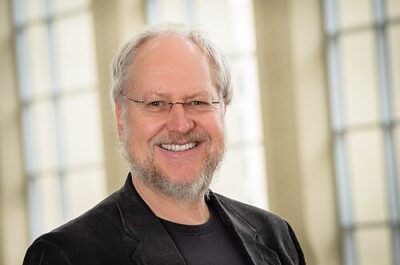
Douglas Crockford
Douglas Crockford is an American computer programmer. Born 1955, in Minnesota. Known for JavaScript and Galahad and the Holy Grail. Educated at San Francisco State University and Newport Harbor High School.
Facts
18 facts · 0 confirmed by two sources · 1 cited · 17 from one source
Where this comes from
Papalocal keeps its own record. It started from these sources; what each one said is kept here as it was copied, so a change on their side never changes this page by itself. Tap one to read its version.
What Wikidata says · copied November 16, 2026 · revision 2535779513
- Described as
- American computer programmer
- Born
- 1955
- Born in
- Minnesota
- Citizen of
- United States
- Occupation
- programmer; computer scientist; software developer · 1 reference
- Worked for
- Atari, Inc. (1982–1984); Lucasfilm (1984–1992); PayPal (2012–2019); Yahoo (2005–2012); Paramount Pictures (1992); SRI International (1976)
- Education
- San Francisco State University (1971–1975); Newport Harbor High School
- Known for
- JavaScript; Galahad and the Holy Grail
- Field
- software engineering
- Website
- https://crockford.com
- Wikipedias with a page
- 20
Wikidata item Q3037998 (wikidata.org/wiki/Q3037998), public domain (CC0). Copied November 16, 2026.
What Wikipedia says · copied November 16, 2026 · revision 1384589931
Douglas Crockford is an American computer programmer who is involved in the development of the JavaScript language. He specified the data format JSON (JavaScript Object Notation), and has developed various JavaScript related tools such as the static code analyzer JSLint and minifier JSMin. Crockford wrote the book JavaScript: The Good Parts, published in 2008, followed by How JavaScript Works in 2018. He was a senior JavaScript architect at PayPal until 2019, and is also a writer and speaker on JavaScript, JSON, and related web technologies.
From the Wikipedia article “Douglas Crockford” (en.wikipedia.org/wiki/Douglas_Crockford), by its contributors, under CC BY-SA 4.0 (creativecommons.org/licenses/by-sa/4.0/). Copied November 16, 2026; not changed.
Confirmed Two sources agree. Cited One source, and it names where it got it. One source One source, without a reference of its own. Sources disagree The sources disagree. We show the best-supported value and keep theirs below.
