
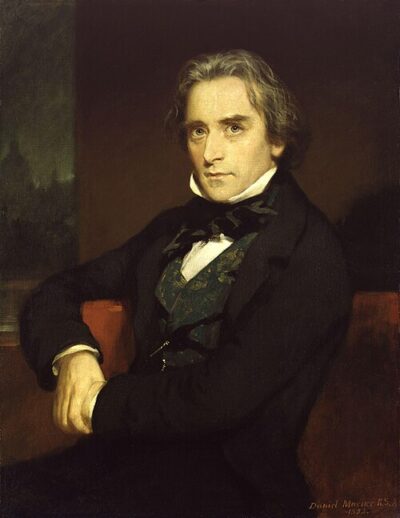
Douglas William Jerrold
Douglas William Jerrold was an English dramatist and writer. Born January 3, 1803, in London. Died June 8, 1857, in London. Known for Mrs. Caudle's curtain lectures.
Facts
9 facts · 2 confirmed by two sources · 3 cited · 4 from one source
Where this comes from
Papalocal keeps its own record. It started from these sources; what each one said is kept here as it was copied, so a change on their side never changes this page by itself. Tap one to read its version.
What Wikidata says · copied November 18, 2026 · revision 2567426052
- Described as
- English dramatist and writer (1803-1857)
- Other names
- Whitefeather, Barabbas,, Doulgas Jerrold
- Born
- January 3, 1803 · 4 references
- Died
- June 8, 1857 · 4 references
- Born in
- London · 1 reference
- Died in
- London · 1 reference
- Buried in
- West Norwood Cemetery
- Citizen of
- United Kingdom of Great Britain and Ireland
- Occupation
- writer · 1 reference
- Known for
- Mrs. Caudle's curtain lectures
- Children
- William Blanchard Jerrold
- Wikipedias with a page
- 22
Wikidata item Q327049 (wikidata.org/wiki/Q327049), public domain (CC0). Copied November 18, 2026.
What Wikipedia says · copied November 18, 2026 · revision 1374559303
Douglas William Jerrold (3 January 1803 – 8 June 1857) was an English dramatist, journalist, and writer, best known for his satirical wit, his socially critical essays, and his association with the early years of Punch magazine. A prominent figure in Victorian literary and theatrical life, he achieved popular success with plays such as Black-Eyed Susan and was noted for his advocacy of social reform through journalism and drama.
- Born, in its opening lines
- January 3, 1803
- Died, in its opening lines
- June 8, 1857
From the Wikipedia article “Douglas William Jerrold” (en.wikipedia.org/wiki/Douglas_William_Jerrold), by its contributors, under CC BY-SA 4.0 (creativecommons.org/licenses/by-sa/4.0/). Copied November 18, 2026; not changed.
Confirmed Two sources agree. Cited One source, and it names where it got it. One source One source, without a reference of its own. Sources disagree The sources disagree. We show the best-supported value and keep theirs below.
