
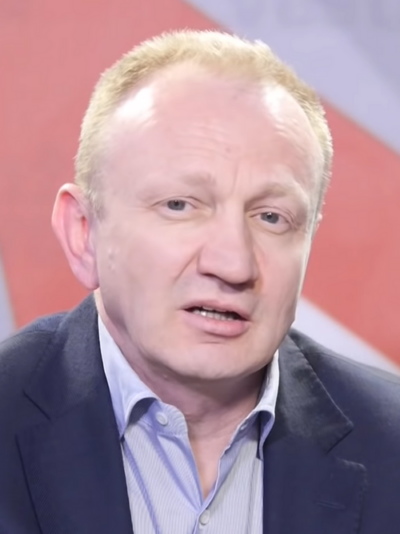
Dragan Đilas is a Serbian politician. Born February 22, 1967, in Belgrade. Positions held include Minister without portfolio of the Republic of Serbia (2007–2008), Mayor of Belgrade (2008–2013) and member of the National Assembly of Serbia (2014). Educated at Faculty of Mechanical Engineering University of Belgrade and Ninth Belgrade Gymnasium.
Facts
18 facts · 1 confirmed by two sources · 4 cited · 13 from one source
Where this comes from
Papalocal keeps its own record. It started from these sources; what each one said is kept here as it was copied, so a change on their side never changes this page by itself. Tap one to read its version.
What Wikidata says · copied November 17, 2026 · revision 2567121363
- Described as
- Serbian politician
- Born
- February 22, 1967
- Born in
- Belgrade · 1 reference
- Citizen of
- Serbia; Socialist Federal Republic of Yugoslavia; Federal Republic of Yugoslavia; Serbia and Montenegro
- Occupation
- engineer; politician · 1 reference; mayor · 1 reference; businessperson · 1 reference
- Positions held
- Minister without portfolio of the Republic of Serbia (2007–2008) · 1 reference; Mayor of Belgrade (2008–2013) · 1 reference; member of the National Assembly of Serbia (2014) · 1 reference
- Political party
- Party of Freedom and Justice
- Education
- Faculty of Mechanical Engineering University of Belgrade; Ninth Belgrade Gymnasium
- Spouse
- Milica Delević
- Religion
- Serbian Orthodox Church
- Wikipedias with a page
- 25
Wikidata item Q818114 (wikidata.org/wiki/Q818114), public domain (CC0). Copied November 17, 2026.
What Wikipedia says · copied November 17, 2026 · revision 1381452531
Dragan Đilas (born 22 February 1967) is a Serbian politician, businessman and media executive who has been the president of the Party of Freedom and Justice (SSP) since its founding in April 2019. He was the mayor of Belgrade from 2008 to 2013 and president of the Basketball Federation of Serbia from 2011 to 2016. A long-time member of the Democratic Party (DS), he led the party from 2012 to 2014. He has been a member of the National Assembly since 2024, having briefly held a seat twice before.
Born and raised in Belgrade, Đilas graduated in mechanical engineering from the University of Belgrade. He began his career as a journalist at Radio Index, and in 1989 co-founded Radio B92, later becoming editor of its news programme. He gained prominence in 1991 as one of the student leaders of the demonstrations against Slobodan Milošević. In 1994 he left journalism for the advertising industry, and went on to build a business career in media, advertising and sports broadcasting rights.
Đilas entered politics in the early 2000s as a close associate of President Boris Tadić. He was director of the President's People's Office from 2004 to 2007 and minister without portfolio in charge of the National Investment Plan in the second cabinet of Vojislav Koštunica from 2007 to 2008. As mayor of Belgrade, he oversaw major infrastructure projects, including the Ada Bridge and the BusPlus ticketing system. He was elected DS president in November 2012, but lost the post to Bojan Pajtić in May 2014, after the party's poor result in the 2014 parliamentary election. After a period away from politics, he returned in 2018, founding the opposition Alliance for Serbia and then the SSP, and has since led it in several opposition coalitions. In the 2026 parliamentary election, he heads the list of the "European Serbia" coalition.
A polarising figure in Serbian politics, Đilas is seen by supporters as a capable opposition leader offering a pro-European and reformist alternative to the government of Aleksandar Vučić and the Serbian Progressive Party (SNS). Critics portray him as a representative of the old political elite and accuse him of corruption and misuse of office, allegations he denies.
- Born, in its opening lines
- February 22, 1967
From the Wikipedia article “Dragan Đilas” (en.wikipedia.org/wiki/Dragan_Đilas), by its contributors, under CC BY-SA 4.0 (creativecommons.org/licenses/by-sa/4.0/). Copied November 17, 2026; not changed.
Confirmed Two sources agree. Cited One source, and it names where it got it. One source One source, without a reference of its own. Sources disagree The sources disagree. We show the best-supported value and keep theirs below.
