
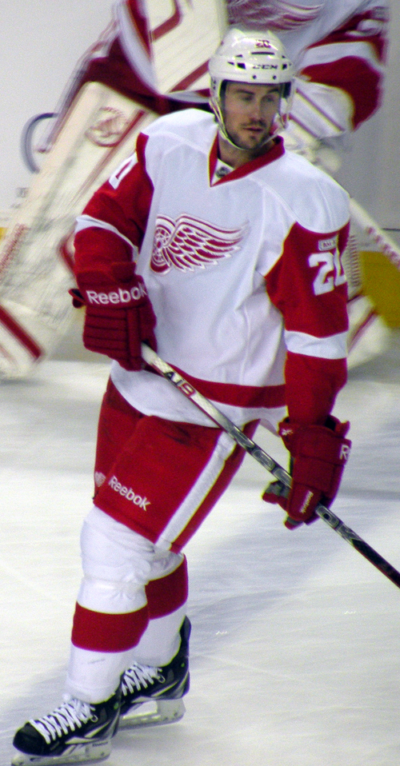
Drew Miller is an American ice hockey player. Born February 17, 1984, in Dover. Teams include Detroit Red Wings, Tampa Bay Lightning and Anaheim Ducks. Educated at Michigan State University and East Lansing High School. Awards include Stanley Cup.
Facts
14 facts · 1 confirmed by two sources · 2 cited · 11 from one source
Where this comes from
Papalocal keeps its own record. It started from these sources; what each one said is kept here as it was copied, so a change on their side never changes this page by itself. Tap one to read its version.
What Wikidata says · copied November 19, 2026 · revision 2557371013
- Described as
- American ice hockey player
- Born
- February 17, 1984
- Born in
- Dover
- Citizen of
- United States
- Occupation
- ice hockey player · 1 reference
- Education
- Michigan State University; East Lansing High School · 1 reference
- Teams
- Detroit Red Wings; Tampa Bay Lightning; Anaheim Ducks; Michigan State Spartans men's ice hockey · 1 reference
- Sport
- ice hockey · 1 reference
- Awards
- Stanley Cup
- Siblings
- Ryan Miller
- Height
- 1.88 m (6 ft 2 in)
- Wikipedias with a page
- 11
Wikidata item Q1258750 (wikidata.org/wiki/Q1258750), public domain (CC0). Copied November 19, 2026.
What Wikipedia says · copied November 19, 2026 · revision 1384760045
Drew Miller (born February 17, 1984) is an American former professional ice hockey winger. He played in the National Hockey League (NHL) with the Anaheim Ducks, Tampa Bay Lightning and Detroit Red Wings.
Miller was drafted in the sixth round, 186th overall, in the 2003 NHL entry draft and made his NHL debut on April 19, 2007, playing with the Anaheim Ducks against the Minnesota Wild. He is the younger brother of former NHL goaltender Ryan Miller.
- Born, in its opening lines
- February 17, 1984
From the Wikipedia article “Drew Miller” (en.wikipedia.org/wiki/Drew_Miller), by its contributors, under CC BY-SA 4.0 (creativecommons.org/licenses/by-sa/4.0/). Copied November 19, 2026; not changed.
Confirmed Two sources agree. Cited One source, and it names where it got it. One source One source, without a reference of its own. Sources disagree The sources disagree. We show the best-supported value and keep theirs below.
