
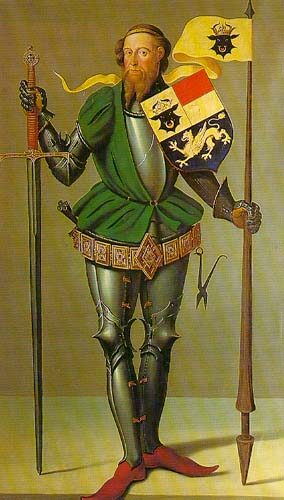
Duke Albrecht II, Duke of Mecklenburg
Duke Albrecht II, Duke of Mecklenburg was a Duke of Mecklenburg. Born 1317, in Schwerin. Died February 18, 1379.
Facts
16 facts · 1 confirmed by two sources · 3 cited · 11 from one source · 1 where the sources disagree
What’s different
- Born: we show 1317 (Sources disagree). Wikipedia says c. 1318
Where this comes from
Papalocal keeps its own record. It started from these sources; what each one said is kept here as it was copied, so a change on their side never changes this page by itself. Tap one to read its version.
What Wikidata says · copied November 18, 2026 · revision 2569159664
- Described as
- Duke of Mecklenburg
- Born
- 1317 · 1 reference
- Died
- February 18, 1379
- Born in
- Schwerin
- Buried in
- Doberan Abbey
- Occupation
- aristocrat
- Spouse
- Euphemia of Sweden (1336–1370) · 1 reference
- Children
- Albert, King of Sweden · 1 reference; Ingeborg of Mecklenburg-Schwerin; Henry III, Duke of Mecklenburg; Magnus I, Duke of Mecklenburg; Anne of Mecklenburg · 1 reference
- Father
- Henry II, Lord of Mecklenburg · 1 reference
- Mother
- Anna of Saxe-Wittenberg
- Siblings
- John I, Duke of Mecklenburg-Stargard; Ludgarda of Mecklenburg; Beatrix von Mecklenburg · 1 reference
- Wikipedias with a page
- 21
Wikidata item Q64251 (wikidata.org/wiki/Q64251), public domain (CC0). Copied November 18, 2026.
What Wikipedia says · copied November 18, 2026 · revision 1370881637
Albert II, Duke of Mecklenburg (c. 1318 – 18 February 1379) was a feudal lord in Northern Germany on the shores of the Baltic Sea. He reigned as the head of the House of Mecklenburg. His princely seat was located in Schwerin beginning in the 1350s.
- Born, in its opening lines
- c. 1318
- Died, in its opening lines
- February 18, 1379
From the Wikipedia article “Albert II of Mecklenburg” (en.wikipedia.org/wiki/Albert_II_of_Mecklenburg), by its contributors, under CC BY-SA 4.0 (creativecommons.org/licenses/by-sa/4.0/). Copied November 18, 2026; not changed.
Confirmed Two sources agree. Cited One source, and it names where it got it. One source One source, without a reference of its own. Sources disagree The sources disagree. We show the best-supported value and keep theirs below.
