
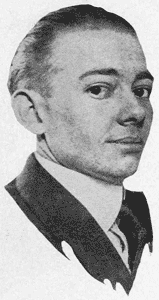
E. C. Segar
E. C. Segar was an American cartoonist. Born December 8, 1894, in Chester. Died October 13, 1938, in Santa Monica. Known for Popeye, Sappo and Charlie Chaplin's Comic Capers. Awards include Will Eisner Hall of Fame.
Facts
16 facts · 2 confirmed by two sources · 5 cited · 9 from one source
Where this comes from
Papalocal keeps its own record. It started from these sources; what each one said is kept here as it was copied, so a change on their side never changes this page by itself. Tap one to read its version.
What Wikidata says · copied November 15, 2026 · revision 2568337726
- Described as
- American cartoonist (1894–1938)
- Other names
- Elzie Crisler Segar, Elzie Segar, Segar
- Born
- December 8, 1894 · 8 references
- Died
- October 13, 1938 · 7 references
- Born in
- Chester
- Died in
- Santa Monica · 1 reference
- Buried in
- Illinois
- Cause of death
- leukemia
- Citizen of
- United States
- Occupation
- comics artist · 2 references; screenwriter; writer; comics writer · 1 reference
- Known for
- Popeye; Sappo; Charlie Chaplin's Comic Capers
- Awards
- Will Eisner Hall of Fame (2001) · 1 reference
- Father
- Amzi A Segar · 1 reference
- Wikipedias with a page
- 28
Wikidata item Q452745 (wikidata.org/wiki/Q452745), public domain (CC0). Copied November 15, 2026.
What Wikipedia says · copied November 15, 2026 · revision 1376989236
Elzie Crisler Segar (; December 8, 1894 – October 13, 1938), known by the pen name E. C. Segar, was an American cartoonist. He created Popeye in 1929, introducing the character in his comic strip Thimble Theatre.
Charles M. Schulz said of Segar's work: "I think Popeye was a perfect comic strip, consistent in drawing and humor". Carl Barks described Segar as "the unbridled genius as far as I was concerned".
- Born, in its opening lines
- December 8, 1894
- Died, in its opening lines
- October 13, 1938
From the Wikipedia article “E. C. Segar” (en.wikipedia.org/wiki/E._C._Segar), by its contributors, under CC BY-SA 4.0 (creativecommons.org/licenses/by-sa/4.0/). Copied November 15, 2026; not changed.
Confirmed Two sources agree. Cited One source, and it names where it got it. One source One source, without a reference of its own. Sources disagree The sources disagree. We show the best-supported value and keep theirs below.
