
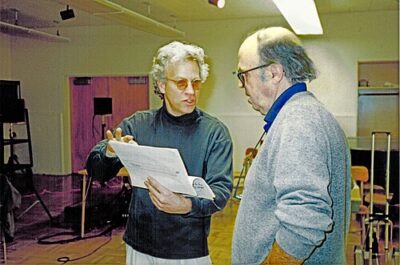
Earle Brown
Earle Brown was an American composer. Born December 26, 1926, in Lunenburg. Died July 2, 2002, in Rye. Educated at Berklee College of Music. Awards include Guggenheim Fellowship, Rome Prize and Arts and Letters Award in Music.
Facts
18 facts · 2 confirmed by two sources · 6 cited · 10 from one source
Where this comes from
Papalocal keeps its own record. It started from these sources; what each one said is kept here as it was copied, so a change on their side never changes this page by itself. Tap one to read its version.
What Wikidata says · copied November 18, 2026 · revision 2557858485
- Described as
- American composer (1926–2002)
- Born
- December 26, 1926 · 8 references
- Died
- July 2, 2002 · 8 references
- Born in
- Lunenburg
- Died in
- Rye · 1 reference
- Buried in
- North Cemetery · 1 reference
- Cause of death
- cancer
- Citizen of
- United States
- Occupation
- composer · 1 reference
- Education
- Berklee College of Music
- Member of
- Bavarian Academy of Fine Arts
- Genre
- experimental music
- Instrument
- trumpet · 1 reference
- Record label
- Tzadik Records
- Awards
- Guggenheim Fellowship · 1 reference; Rome Prize; Arts and Letters Award in Music (1972) · 1 reference
- Field
- music · 1 reference
- Website
- https://earle-brown.org/
- Wikipedias with a page
- 15
Wikidata item Q1277459 (wikidata.org/wiki/Q1277459), public domain (CC0). Copied November 18, 2026.
What Wikipedia says · copied November 18, 2026 · revision 1375546419
Earle Brown (December 26, 1926 – July 2, 2002) was an American music composer, producer, and educator who, as a composer, was a close associate of John Cage, and established his own formal and notational systems. As such, he created "open form," a style of musical construction that influenced composers like John Zorn and the downtown New York scene of the 1980s, as well as later generations of composers.
Among Brown's most famous works are December 1952, an entirely graphic score, and the open form pieces Available Forms I & II, Centering, Cross Sections and Color Fields. He was awarded a Foundation for Contemporary Arts John Cage Award in 1998.
- Born, in its opening lines
- December 26, 1926
- Died, in its opening lines
- July 2, 2002
From the Wikipedia article “Earle Brown” (en.wikipedia.org/wiki/Earle_Brown), by its contributors, under CC BY-SA 4.0 (creativecommons.org/licenses/by-sa/4.0/). Copied November 18, 2026; not changed.
Confirmed Two sources agree. Cited One source, and it names where it got it. One source One source, without a reference of its own. Sources disagree The sources disagree. We show the best-supported value and keep theirs below.
