
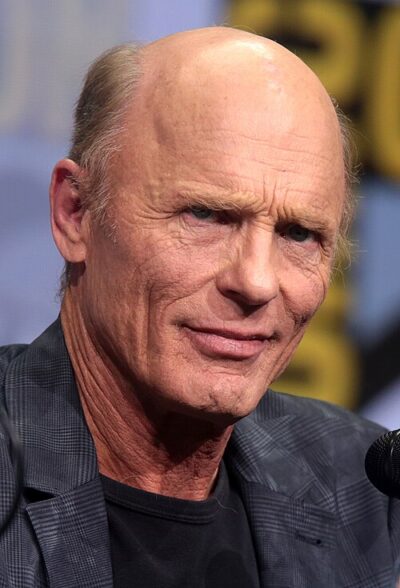
Ed Harris
Ed Harris is an American actor and director. Born November 28, 1950, in Englewood. Teams include Columbia Lions football. Educated at Columbia University and University of Oklahoma. Awards include Drama Desk Award for Outstanding Actor in a Play, Broadcast Film Critics Association Award for Best Supporting Actor and Screen Actors Guild Award for Outstanding Performance by a Male Actor in a Supporting Role.
Facts
40 facts · 1 confirmed by two sources · 6 cited · 33 from one source
Where this comes from
Papalocal keeps its own record. It started from these sources; what each one said is kept here as it was copied, so a change on their side never changes this page by itself. Tap one to read its version.
What Wikidata says · copied November 13, 2026 · revision 2565103841
- Described as
- American actor and director (born 1950)
- Other names
- Edward Allen Harris
- Born
- November 28, 1950 · 7 references
- Born in
- Englewood · 4 references
- Name at birth
- Edward Allen Harris
- Citizen of
- United States
- Occupation
- film actor · 1 reference; film director; character actor; screenwriter · 2 references; film producer · 2 references; stage actor; television actor; voice actor
- Education
- Columbia University; University of Oklahoma; California Institute of the Arts (–1973); Tenafly High School (–1969) · 1 reference; School of the Art Institute of Chicago · 1 reference
- Teams
- Columbia Lions football · 1 reference
- Genre
- Western
- Awards
- Drama Desk Award for Outstanding Actor in a Play (1986); Broadcast Film Critics Association Award for Best Supporting Actor (1995); Screen Actors Guild Award for Outstanding Performance by a Male Actor in a Supporting Role (1996); Actor Award for Outstanding Performance by a Cast in a Motion Picture (1996); National Board of Review Award for Best Supporting Actor (1998); Golden Globe Award for Best Supporting Actor – Motion Picture (1998); Southeastern Film Critics Association Award for Best Supporting Actor (1999); Toronto Film Critics Association Award for Best Actor (2001); National Society of Film Critics Award for Best Supporting Actor (2005); Theatre World Award (1986) · 1 reference; Golden Globes; Saturn Awards; star on Hollywood Walk of Fame · 1 reference; Golden Globe Award for Best Supporting Actor – Series, Miniseries or Television Film (2013); Sitges Grand Honorary Award (2018)
- Spouse
- Amy Madigan (1983–)
- Father
- Bob L. Harris
- Religion
- Presbyterianism · 1 reference
- Lived in
- Tenafly; Malibu; Los Angeles
- Wikipedias with a page
- 78
Wikidata item Q104791 (wikidata.org/wiki/Q104791), public domain (CC0). Copied November 13, 2026.
What Wikipedia says · copied November 13, 2026 · revision 1384400540
Edward Allen Harris (born November 28, 1950) is an American actor and filmmaker. Harris received nominations for the Academy Award for Best Supporting Actor for his performances in Apollo 13 (1995), The Truman Show (1998), and The Hours (2002). He also directed and starred in Pollock (2000), for which he was nominated for the Academy Award for Best Actor, and Appaloosa (2008).
Harris has appeared in numerous leading and supporting roles, including Knightriders (1981), Creepshow (1982), The Right Stuff (1983), Places in the Heart (1984), The Abyss (1989), Glengarry Glen Ross (1992), The Firm (1993), Nixon (1995), The Rock (1996), Stepmom (1998), A Beautiful Mind, Enemy at the Gates (both 2001), A History of Violence (2005), Gone Baby Gone, National Treasure: Book of Secrets (both 2007), The Way Back (2010), Snowpiercer (2013), Mother! (2017), The Lost Daughter (2021), and Top Gun: Maverick (2022).
On television, Harris is notable for his roles as Warren on the CBS drama series Lou Grant (1979–81) and Miles Roby on the HBO drama miniseries Empire Falls (2005). He also starred as William / The Man in Black on the HBO dystopian sci-fi western series Westworld (2016–22).
- Born, in its opening lines
- November 28, 1950
From the Wikipedia article “Ed Harris” (en.wikipedia.org/wiki/Ed_Harris), by its contributors, under CC BY-SA 4.0 (creativecommons.org/licenses/by-sa/4.0/). Copied November 13, 2026; not changed.
Confirmed Two sources agree. Cited One source, and it names where it got it. One source One source, without a reference of its own. Sources disagree The sources disagree. We show the best-supported value and keep theirs below.
