
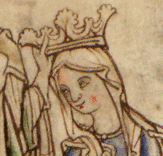
Edith of Wessex was the 11th-century Queen of England. Died December 18, 1075, in Winchester.
Facts
14 facts · 1 confirmed by two sources · 10 cited · 3 from one source
Where this comes from
Papalocal keeps its own record. It started from these sources; what each one said is kept here as it was copied, so a change on their side never changes this page by itself. Tap one to read its version.
What Wikidata says · copied November 17, 2026 · revision 2561010823
- Described as
- 11th-century Queen of England
- Other names
- Eadgyth of Wessex, Eadgyth, Edith
- Died
- December 18, 1075 · 1 reference
- Died in
- Winchester · 1 reference
- Buried in
- Westminster Abbey · 1 reference
- Occupation
- consort
- Spouse
- Edward the Confessor (1045–1066) · 2 references
- Father
- Godwin, Earl of Wessex · 2 references
- Mother
- Gytha Thorkelsdóttir · 2 references
- Siblings
- Leofwine Godwinson · 1 reference; Gyrth Godwinson · 1 reference; Sweyn Godwinson · 1 reference; Harold Godwinson · 1 reference; Wulfnoth Godwinson; Tostig Godwinson · 1 reference; Ælfgifu
- Wikipedias with a page
- 25
Wikidata item Q259564 (wikidata.org/wiki/Q259564), public domain (CC0). Copied November 17, 2026.
What Wikipedia says · copied November 17, 2026 · revision 1379905755
Edith of Wessex (Old English: Ealdgyth; c. 1025 – 18 December 1075) was Queen of England through her marriage to Edward the Confessor from 1045 until Edward's death in 1066. Unlike most English queens in the 10th and 11th centuries, she was crowned. The principal source on her life is a work she herself commissioned, the Vita Ædwardi Regis or the Life of King Edward who rests at Westminster, which is inevitably biased.
- Born, in its opening lines
- c. 1025
- Died, in its opening lines
- December 18, 1075
From the Wikipedia article “Edith of Wessex” (en.wikipedia.org/wiki/Edith_of_Wessex), by its contributors, under CC BY-SA 4.0 (creativecommons.org/licenses/by-sa/4.0/). Copied November 17, 2026; not changed.
Confirmed Two sources agree. Cited One source, and it names where it got it. One source One source, without a reference of its own. Sources disagree The sources disagree. We show the best-supported value and keep theirs below.
