
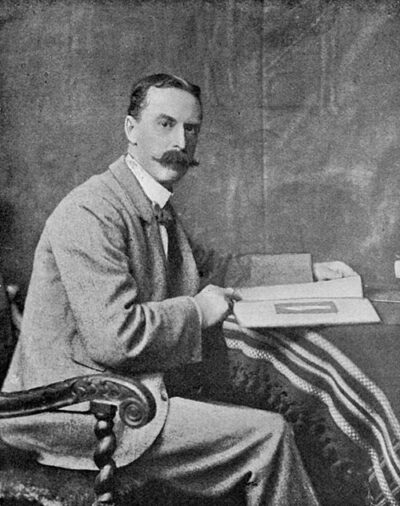
Edmund Blair Leighton
Edmund Blair Leighton was a British Romantic painter. Born September 21, 1852, in London. Died September 1, 1922, in London. Known for Lady Godiva. Educated at Royal Academy of Arts and Heatherley School of Fine Art.
Facts
11 facts · 2 confirmed by two sources · 3 cited · 6 from one source
Where this comes from
Papalocal keeps its own record. It started from these sources; what each one said is kept here as it was copied, so a change on their side never changes this page by itself. Tap one to read its version.
What Wikidata says · copied November 16, 2026 · revision 2567295687
- Described as
- British Romantic painter (1852-1922)
- Other names
- Edward Blair Leighton
- Born
- September 21, 1852 · 1 reference
- Died
- September 1, 1922 · 3 references
- Born in
- London · 1 reference
- Died in
- London · 1 reference
- Citizen of
- United Kingdom of Great Britain and Ireland
- Occupation
- painter · 1 reference
- Education
- Royal Academy of Arts; Heatherley School of Fine Art
- Genre
- genre painting
- Known for
- Lady Godiva
- Field
- painting
- Wikipedias with a page
- 33
Wikidata item Q142420 (wikidata.org/wiki/Q142420), public domain (CC0). Copied November 16, 2026.
What Wikipedia says · copied November 16, 2026 · revision 1365493569
Edmund Blair Leighton (21 September 1852 – 1 September 1922) was an English painter of historical genre scenes, specialising in Regency and medieval subjects. His art is associated with the Pre-Raphaelite movement of the mid-to-late nineteenth and early twentieth centuries, though his artwork is less stylised and much more naturalistic.
- Born, in its opening lines
- September 21, 1852
- Died, in its opening lines
- September 1, 1922
From the Wikipedia article “Edmund Blair Leighton” (en.wikipedia.org/wiki/Edmund_Blair_Leighton), by its contributors, under CC BY-SA 4.0 (creativecommons.org/licenses/by-sa/4.0/). Copied November 16, 2026; not changed.
Confirmed Two sources agree. Cited One source, and it names where it got it. One source One source, without a reference of its own. Sources disagree The sources disagree. We show the best-supported value and keep theirs below.
