
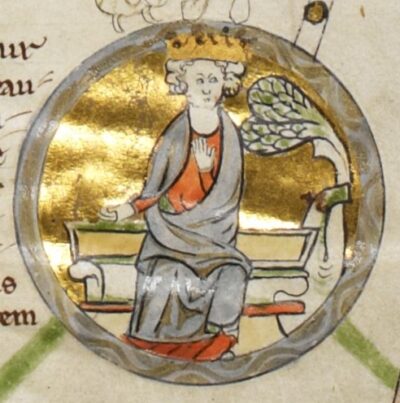
Edmund I
Edmund I was a King of England (r. 939–946). Born 920, in Kingdom of Wessex. Died May 26, 946, in Pucklechurch. Positions held include Monarch of England (939–946).
Facts
27 facts · 0 confirmed by two sources · 10 cited · 17 from one source
Where this comes from
Papalocal keeps its own record. It started from these sources; what each one said is kept here as it was copied, so a change on their side never changes this page by itself. Tap one to read its version.
What Wikidata says · copied November 16, 2026 · revision 2560363775
- Described as
- King of England (r. 939–946)
- Other names
- Edmund the Just, Edmund, king of England, Eadmund the Deed-Doer, Eadmund, king of the English, Edmund the Deed-Doer, King Edmund I, Eadmund I of England, Edmund, king of the English, Eadmund the Magnificent, Edmund the Elder, Eadmund, king of England, Eadmund the Elder
- Born
- 920
- Died
- May 26, 946 · 1 reference
- Born in
- Kingdom of Wessex · 1 reference
- Died in
- Pucklechurch
- Buried in
- Glastonbury Abbey
- Citizen of
- Kingdom of Wessex; Kingdom of England
- Occupation
- sovereign; monarch
- Positions held
- Monarch of England (939–946)
- Spouse
- Ælfgifu of Shaftesbury (940–) · 2 references; Æthelflæd of Damerham (944–) · 2 references
- Children
- Eadwig · 2 references; Edgar of England · 1 reference
- Father
- Edward the Elder · 1 reference
- Mother
- Eadgifu of Kent · 1 reference
- Siblings
- Æthelstan; Edred of England · 1 reference; Ælfweard of Wessex; Edwin, son of Edward the Elder; Eadburh of Winchester · 1 reference; Eadgyth; Eadgifu of Wessex; Edith of Polesworth; Eadhild; Eadgifu · 1 reference
- Religion
- Christianity · 1 reference
- Wikipedias with a page
- 61
Wikidata item Q190166 (wikidata.org/wiki/Q190166), public domain (CC0). Copied November 16, 2026.
What Wikipedia says · copied November 16, 2026 · revision 1380953986
Edmund I or Eadmund I (920/921 – 26 May 946) was King of the English from 27 October 939 until his death in 946. He was the elder son of King Edward the Elder and his third wife, Queen Eadgifu, and a grandson of King Alfred the Great. Edmund was crowned king after his eldest half-brother, King Æthelstan, died childless in 939. He had two sons, Eadwig and Edgar, who were young children when he was killed in a brawl with an outlaw at Pucklechurch in Gloucestershire. Edmund was succeeded by his younger brother Eadred, who died in 955 and was followed by Edmund's sons in succession.
Æthelstan had succeeded as the king of England south of the Humber and he became the first king of all England when he conquered Viking-ruled York in 927, but after his death Anlaf Guthfrithson was accepted as King of York and extended Viking rule to the Five Boroughs of north-east Mercia. Edmund was initially forced to accept the reverse, the first major setback for the West Saxon dynasty since Alfred's reign, but he was able to recover his position following Anlaf's death in 941. In 942, Edmund took back control of the Five Boroughs and in 944 he regained control over the whole of England when he expelled the Viking kings of York. Eadred had to deal with further revolts when he became king, and York was not finally conquered until 954. Æthelstan had achieved a dominant position over other British kings and Edmund maintained this, perhaps apart from Scotland. The north Welsh king Idwal Foel may have allied with the Vikings as he was killed by the English in 942. The British kingdom of Strathclyde may also have sided with the Vikings as Edmund ravaged it in 945 and then ceded it to Malcolm I of Scotland. Edmund also continued his brother's friendly relations with Continental rulers, several of whom were married to his half-sisters.
Edmund inherited his brother's interests and leading advisers, such as Oda, whom he appointed Archbishop of Canterbury in 941, Æthelstan Half-King, ealdorman of East Anglia, and Ælfheah the Bald, Bishop of Winchester. Government at the local level was mainly carried on by ealdormen, and Edmund made substantial changes in personnel during his reign, with a move from Æthelstan's main reliance on West Saxons to a greater prominence of men with Mercian connections. Unlike the close relatives of previous kings, his mother Eadgifu and brother Eadred attested many of Edmund's charters, suggesting a high degree of family cooperation. Edmund was also an active legislator, and three of his codes survive. Provisions include ones which attempt to regulate feuds and emphasise the sanctity of the royal person.
The major religious movement of the tenth century, the English Benedictine Reform, reached its peak under Edgar, but Edmund's reign was important in its early stages. He appointed Dunstan abbot of Glastonbury, where he was joined by Æthelwold. They were to be two of the leaders of the reform and they made the abbey the first important centre for disseminating it. Unlike the circle of his son Edgar, Edmund did not take the view that Benedictine monasticism was the only worthwhile religious life, and he also patronised unreformed (non-Benedictine) establishments.
From the Wikipedia article “Edmund I” (en.wikipedia.org/wiki/Edmund_I), by its contributors, under CC BY-SA 4.0 (creativecommons.org/licenses/by-sa/4.0/). Copied November 16, 2026; not changed.
Confirmed Two sources agree. Cited One source, and it names where it got it. One source One source, without a reference of its own. Sources disagree The sources disagree. We show the best-supported value and keep theirs below.
