
Edmund the Martyr
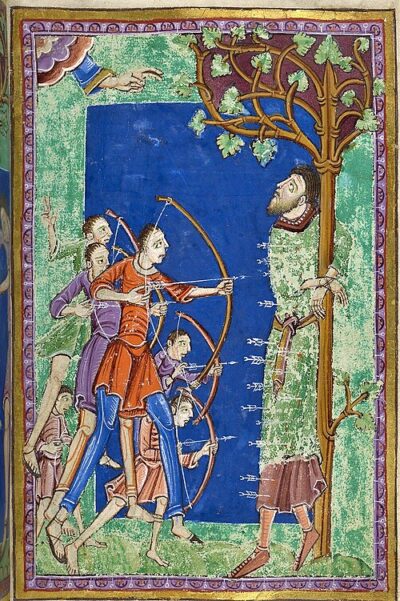
Edmund the Martyr was a King of East Anglia from about 855 until 869. Born 841. Died November 20, 869, in Hoxne. Positions held include King of East Anglia (855–869).
Facts
8 facts · 1 confirmed by two sources · 1 cited · 6 from one source
Where this comes from
Papalocal keeps its own record. It started from these sources; what each one said is kept here as it was copied, so a change on their side never changes this page by itself. Tap one to read its version.
What Wikidata says · copied November 16, 2026 · revision 2553970084
- Described as
- King of East Anglia from about 855 until 869
- Other names
- St Edmund, Edmund, St. Edmund, Saint Edmund
- Born
- 841
- Died
- November 20, 869 · 1 reference
- Died in
- Hoxne
- Buried in
- Bury St Edmunds Abbey
- Citizen of
- Kingdom of East Anglia
- Occupation
- sovereign
- Positions held
- King of East Anglia (855–869) · 1 reference
- Father
- Æthelweard · 1 reference
- Wikipedias with a page
- 29
Wikidata item Q381815 (wikidata.org/wiki/Q381815), public domain (CC0). Copied November 16, 2026.
What Wikipedia says · copied November 16, 2026 · revision 1383488113
Edmund the Martyr (also known as St Edmund and Edmund of East Anglia, died 20 November 869) was king of East Anglia from about 855 until his death.
Few historical facts about Edmund are known, as East Anglia was devastated by the Vikings, who destroyed any contemporary evidence of his reign. Coins minted by Edmund indicate that he succeeded Æthelweard of East Anglia, as they shared the same moneyers. He is thought to have been of East Anglian origin, but 12th-century writers produced fictitious accounts of his family, succession and his rule as king. Edmund's death was mentioned in the Anglo-Saxon Chronicle, which relates that he was killed in 869 after the Great Heathen Army advanced into East Anglia. Medieval versions of Edmund's life and martyrdom differ as to whether he died in battle fighting the Great Heathen Army or if he met his death after being captured and then refusing the Viking leaders' demand that he renounce Christ.
A popular cult emerged after Edmund's death, and he was canonised by the Church. A series of coins commemorating him was minted from around the time East Anglia was absorbed by the kingdom of Wessex in 918, and in about 986, the French monk Abbo of Fleury wrote of his life and martyrdom.
During the 10th century, Edmund's remains were translated from an unidentified location in East Anglia to Beodericsworth (modern Bury St Edmunds); they were temporarily moved to London for safekeeping in 1010. Edmund's cult flourished during the Early and High Middle Ages, and he and Edward the Confessor were regarded as the patron saints of medieval England until they were replaced by Saint George in the 15th century. Medieval manuscripts and works of art relating to Edmund include Abbo's Passio Sancti Eadmundi, John Lydgate's 15th-century Life, the Wilton Diptych, and a number of church wall paintings.
- Died, in its opening lines
- November 20, 869
From the Wikipedia article “Edmund the Martyr” (en.wikipedia.org/wiki/Edmund_the_Martyr), by its contributors, under CC BY-SA 4.0 (creativecommons.org/licenses/by-sa/4.0/). Copied November 16, 2026; not changed.
Confirmed Two sources agree. Cited One source, and it names where it got it. One source One source, without a reference of its own. Sources disagree The sources disagree. We show the best-supported value and keep theirs below.
