
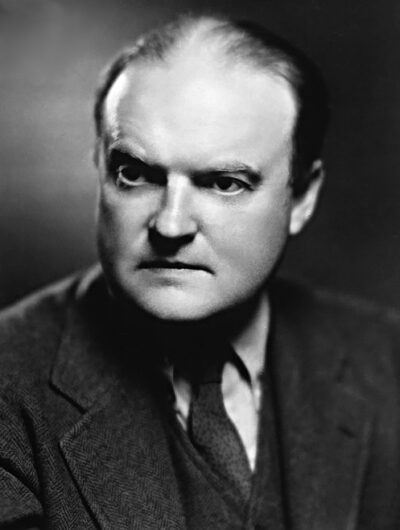
Edmund Wilson
Edmund Wilson was an American writer, literary and social critic, and noted man of letters. Born May 8, 1895, in Red Bank. Died June 12, 1972, in Talcottville. Known for To the Finland Station and Patriotic Gore. Educated at The Hill School and Princeton University. Awards include Guggenheim Fellowship, Emerson-Thoreau Medal and Presidential Medal of Freedom.
Facts
34 facts · 2 confirmed by two sources · 17 cited · 15 from one source
Where this comes from
Papalocal keeps its own record. It started from these sources; what each one said is kept here as it was copied, so a change on their side never changes this page by itself. Tap one to read its version.
What Wikidata says · copied November 15, 2026 · revision 2558957290
- Described as
- American writer, literary and social critic, and noted man of letters (1895-1972)
- Born
- May 8, 1895 · 11 references
- Died
- June 12, 1972 · 11 references
- Born in
- Red Bank · 4 references
- Died in
- Talcottville
- Buried in
- Pleasant Hill Cemetery · 1 reference
- Cause of death
- cardiovascular disease
- Citizen of
- United States · 3 references
- Occupation
- journalist · 1 reference; poet · 2 references; playwright; literary critic · 1 reference; essayist; social critic; writer · 1 reference; historian · 1 reference
- Worked for
- Wesleyan University; The New Yorker · 1 reference; Vanity Fair · 1 reference; The New Republic · 1 reference
- Education
- The Hill School; Princeton University (1912–1916) · 1 reference; Columbia University · 1 reference
- Known for
- To the Finland Station; Patriotic Gore
- Awards
- Guggenheim Fellowship (1935) · 1 reference; Emerson-Thoreau Medal (1966); Presidential Medal of Freedom (1963) · 1 reference
- Field
- literary activity · 1 reference; literary criticism · 1 reference; editing · 1 reference
- Spouse
- Mary McCarthy (1938–1946); Elena Mumm Thornton Wilson
- Father
- Edmund Wilson, Sr.
- Lived in
- Talcottville (–1972)
- Wikipedias with a page
- 30
Wikidata item Q704931 (wikidata.org/wiki/Q704931), public domain (CC0). Copied November 15, 2026.
What Wikipedia says · copied November 15, 2026 · revision 1373691583
Edmund Wilson Jr. (May 8, 1895 – June 12, 1972) was an American writer, literary critic, and journalist. He is widely regarded as one of the most important literary critics of the 20th century. Wilson began his career as a journalist, writing for publications such as Vanity Fair and The New Yorker. He helped to edit The New Republic, served as chief book critic for The New Yorker, and was a frequent contributor to The New York Review of Books.
His notable works include Axel's Castle (1931), described by Joyce Carol Oates as "a groundbreaking study of modern literature." Oates writes that Wilson "encroached fearlessly on areas reserved for academic 'experts': early Christianity in The Dead Sea Scrolls (1955), native American civilization in Apologies to the Iroquois (1960), and the American Civil War in Patriotic Gore (1962)."
Wilson also authored a novel, I Thought of Daisy (1929) and a collection of short stories, Memoirs of Hecate County (1946). He was a friend of many notable figures, including F. Scott Fitzgerald, Ernest Hemingway, John Dos Passos and Vladimir Nabokov. His dream for a Library of America series of national classic works came to fruition through the efforts of Jason Epstein after Wilson's death. He was a two-time winner of the National Book Award and received the Presidential Medal of Freedom in 1964. He died in 1972 at age 77.
- Born, in its opening lines
- May 8, 1895
- Died, in its opening lines
- June 12, 1972
From the Wikipedia article “Edmund Wilson” (en.wikipedia.org/wiki/Edmund_Wilson), by its contributors, under CC BY-SA 4.0 (creativecommons.org/licenses/by-sa/4.0/). Copied November 15, 2026; not changed.
Confirmed Two sources agree. Cited One source, and it names where it got it. One source One source, without a reference of its own. Sources disagree The sources disagree. We show the best-supported value and keep theirs below.
