
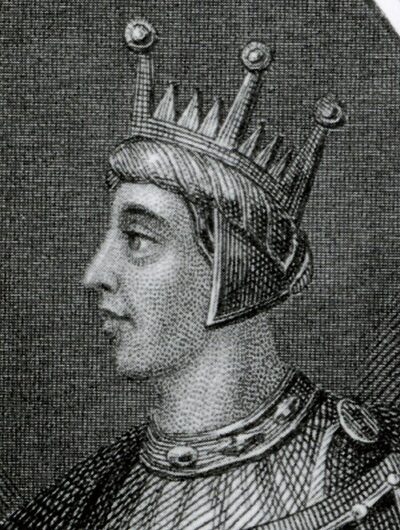
Edred of England
Edred of England was a King of England (r. 946–955). Born 923, in Kingdom of Wessex. Died November 23, 955, in Frome. Positions held include Monarch of England (946–955).
Facts
21 facts · 2 confirmed by two sources · 7 cited · 12 from one source
Where this comes from
Papalocal keeps its own record. It started from these sources; what each one said is kept here as it was copied, so a change on their side never changes this page by itself. Tap one to read its version.
What Wikidata says · copied November 16, 2026 · revision 2560364046
- Described as
- King of England (r. 946–955)
- Other names
- Eadred, king of the English, King Eadred, Eadræd, Edred, king of the English, Eadred the Weak-in-the-Feet, Edred, king of England, Eadred, King Edred, Eadred, king of England, Eadræd, king of England, Eadred of England, Eadræd the Weak-in-the-Feet
- Born
- 923 · 4 references
- Died
- November 23, 955 · 3 references
- Born in
- Kingdom of Wessex · 1 reference
- Died in
- Frome · 1 reference
- Buried in
- Winchester Cathedral
- Citizen of
- Kingdom of Wessex (–927); Kingdom of England (927–)
- Occupation
- monarch
- Positions held
- Monarch of England (946–955)
- Father
- Edward the Elder · 2 references
- Mother
- Eadgifu of Kent · 2 references
- Siblings
- Eadgyth; Eadburh of Winchester · 1 reference; Eadgifu of Wessex; Æthelstan; Edmund I · 1 reference; Ælfweard of Wessex; Edwin, son of Edward the Elder; Edith of Polesworth · 1 reference; Eadgifu · 1 reference
- Religion
- Chalcedonian Christianity
- Wikipedias with a page
- 58
Wikidata item Q191767 (wikidata.org/wiki/Q191767), public domain (CC0). Copied November 16, 2026.
What Wikipedia says · copied November 16, 2026 · revision 1382307975
Eadred (also Edred, c. 923 – 23 November 955) was King of the English from 26 May 946 until his death in 955. He was the younger son of Edward the Elder and his third wife, Eadgifu. When his elder brother, Edmund I, was killed in 946, Edmund's two sons, Eadwig and Edgar, were young children, so Eadred became king. He suffered from ill health in the last years of his life and died in his early thirties, having never married. He was succeeded in turn by his nephews, Eadwig and Edgar.
Eadred's elder half-brother Æthelstan inherited the kingship of England south of the Humber in 924, and conquered the south Northumbrian Viking kingdom of York in 927. Edmund and Eadred both inherited kingship of the whole kingdom, lost it shortly afterwards when York accepted Viking kings, and recovered it by the end of their reigns. In 954, the York magnates expelled their last king, Erik Bloodaxe, and Eadred appointed Osullf, the Anglo-Saxon ruler of the north Northumbrian territory of Bamburgh, as the first ealdorman of the whole of Northumbria.
Eadred had been very close to Edmund and inherited many of his leading advisers, such as his mother Eadgifu, Oda, Archbishop of Canterbury, and Æthelstan, ealdorman of East Anglia, who was so powerful that he was known as the "Half-King". Dunstan, Abbot of Glastonbury and future Archbishop of Canterbury, was a close friend and adviser, and Eadred appears to have authorised Dunstan to draft charters when he became too ill to attend meetings of the witan (King's Council) in his last years.
The English Benedictine Reform did not reach fruition until the reign of Edgar, but Eadred was a strong supporter in its early stages. He was close to two of its leaders, Æthelwold, whom he appointed Abbot of Abingdon, and Dunstan. However, like earlier kings he did not share the view of the circle around Æthelwold that Benedictine monasticism was the only worthwhile religious life and he appointed Ælfsige, a married man with a son, as Bishop of Winchester.
- Born, in its opening lines
- c. 923
- Died, in its opening lines
- November 23, 955
From the Wikipedia article “Eadred” (en.wikipedia.org/wiki/Eadred), by its contributors, under CC BY-SA 4.0 (creativecommons.org/licenses/by-sa/4.0/). Copied November 16, 2026; not changed.
Confirmed Two sources agree. Cited One source, and it names where it got it. One source One source, without a reference of its own. Sources disagree The sources disagree. We show the best-supported value and keep theirs below.
