
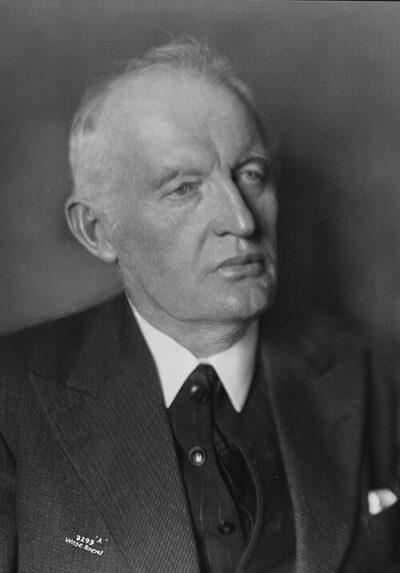
Edvard Munch
Edvard Munch was a Norwegian painter. Born December 12, 1863, in Ådalsbruk. Died January 23, 1944, in Ekely. Known for Death and the Child, Vampire and The Scream. Educated at Oslo Cathedral School and Norwegian National Academy of Craft and Art Industry. Awards include Knight Grand Cross of the Order of St. Olav and Goethe Medal for Art and Science.
Facts
41 facts · 2 confirmed by two sources · 15 cited · 24 from one source
Where this comes from
Papalocal keeps its own record. It started from these sources; what each one said is kept here as it was copied, so a change on their side never changes this page by itself. Tap one to read its version.
What Wikidata says · copied November 16, 2026 · revision 2569898883
- Described as
- Norwegian painter (1863–1944)
- Other names
- Munch, edv. munch, Eduard Munch, E. Munch, Munch, Edvard
- Born
- December 12, 1863 · 13 references
- Died
- January 23, 1944 · 14 references
- Born in
- Ådalsbruk · 3 references
- Died in
- Ekely · 1 reference
- Buried in
- Vår Frelsers gravlund (1960–) · 2 references
- Name at birth
- Edvard Munch
- Citizen of
- Norway · 2 references
- Occupation
- painter · 5 references; graphic artist · 2 references; printmaker · 4 references; draftsperson · 2 references; architectural drafter · 1 reference
- Education
- Oslo Cathedral School; Norwegian National Academy of Craft and Art Industry; Academy of Fine Arts, Munich
- Member of
- Berlin Secession · 1 reference
- Genre
- portrait; Expressionism; genre painting · 1 reference; landscape painting · 1 reference; self-portrait · 1 reference
- Known for
- Death and the Child; Vampire; The Scream; The Girls on the Bridge; Dr. Linde's Sons; From Travemünde; Lothar Linde in Red Jacket; Self-Portrait with the Spanish Flu; Arve Arvesen
- Awards
- Knight Grand Cross of the Order of St. Olav; Goethe Medal for Art and Science (1932)
- Field
- painting · 1 reference
- Father
- Christian Munch · 2 references
- Mother
- Laura Cathrine Munch
- Siblings
- Inger Munch; Peter Andreas Munch; Laura Munch
- Lived in
- Oslo; Ekely; Edvard Munchs house
- Wikipedias with a page
- 120
Wikidata item Q41406 (wikidata.org/wiki/Q41406), public domain (CC0). Copied November 16, 2026.
What Wikipedia says · copied November 16, 2026 · revision 1384150062
Edvard Munch ( MUUNK; Norwegian: [ˈɛ̀dvɑɖ ˈmʊŋk] ; 12 December 1863 – 23 January 1944) was a Norwegian painter. His 1893 work The Scream has become one of the iconic and acclaimed images in all of Western art.
Munch's childhood was overshadowed by illness, bereavement and the dread of inheriting a mental condition that ran in the family. Studying at the Royal School of Art and Design in Kristiania (Oslo), Munch began to live a bohemian life under the influence of the nihilist Hans Jæger, who urged him to paint his own emotional and psychological state ('soul painting'); from this emerged his distinctive style.
Travel brought new influences and outlets. In Paris, he learned much from Paul Gauguin, Vincent van Gogh and Henri de Toulouse-Lautrec, especially their use of color. In Berlin, he met the Swedish dramatist August Strindberg, whom he painted, as he embarked on a major series of paintings he later called The Frieze of Life, depicting a series of deeply felt themes such as love, anxiety, jealousy and betrayal, steeped in atmosphere.
The Scream was conceived in Kristiania. According to Munch, he was out walking at sunset, when he 'heard the enormous, infinite scream of nature'. The painting's agonized face is widely identified with the angst of the modern person. Between 1893 and 1910, he made two painted versions and two in pastels, as well as a number of prints. One of the pastels eventually commanded the fourth highest nominal price paid for a painting at auction.As his fame and wealth grew, his emotional state remained insecure. He briefly considered marriage, but could not commit himself. A mental breakdown in 1908 forced him to give up heavy drinking, and he was cheered by his increasing acceptance by the people of Kristiania and exposure in the city's museums. His later years were spent working in peace and privacy. Although his works were banned in Nazi-occupied Europe, most of them survived World War II, securing his legacy.
Munch displayed a remarkable talent for drawing from an early age, yet he received minimal formal artistic training.
A pivotal influence on his artistic growth was his association with the Kristiania Bohème—a progressive circle of writers and artists in Kristiania (the former name of Oslo). The group's members championed free love and openly rejected the narrow-minded conventions of bourgeois society.
Among the more established painters in this circle, Christian Krohg provided Munch with valuable instruction as well as ongoing encouragement and support.
Edvard Munch was highly active in the fields of graphic art and printmaking, producing a substantial body of work using intaglio techniques—such as etching, drypoint, and aquatint—on copper plates. Beginning in 1894, he embarked on engraving directly onto copper and, largely self-taught and without formal instruction, created numerous masterpieces in this medium.
- Born, in its opening lines
- December 12, 1863
- Died, in its opening lines
- January 23, 1944
From the Wikipedia article “Edvard Munch” (en.wikipedia.org/wiki/Edvard_Munch), by its contributors, under CC BY-SA 4.0 (creativecommons.org/licenses/by-sa/4.0/). Copied November 16, 2026; not changed.
Confirmed Two sources agree. Cited One source, and it names where it got it. One source One source, without a reference of its own. Sources disagree The sources disagree. We show the best-supported value and keep theirs below.
