
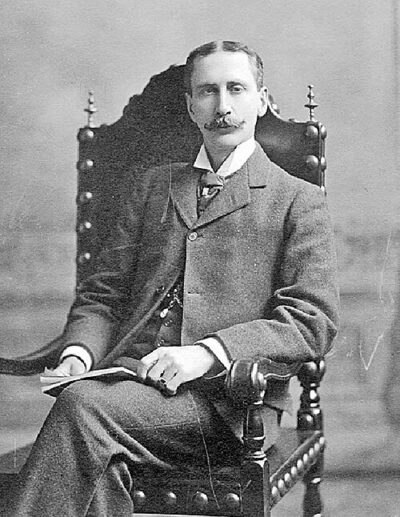
Edward Angle
Edward Angle was an American dentist. Born June 1, 1855, in Herricks. Died August 11, 1930, in Pasadena.
Facts
8 facts · 2 confirmed by two sources · 0 cited · 6 from one source
Where this comes from
Papalocal keeps its own record. It started from these sources; what each one said is kept here as it was copied, so a change on their side never changes this page by itself. Tap one to read its version.
What Wikidata says · copied November 18, 2026 · revision 2513376717
- Described as
- American dentist (1855–1930)
- Other names
- Edward Hartley Angle
- Born
- June 1, 1855 · 2 references
- Died
- August 11, 1930 · 2 references
- Born in
- Herricks
- Died in
- Pasadena
- Citizen of
- United States
- Occupation
- dentist
- Worked for
- Northwestern University; Washington University in St. Louis · 1 reference
- Wikipedias with a page
- 15
Wikidata item Q1292424 (wikidata.org/wiki/Q1292424), public domain (CC0). Copied November 18, 2026.
What Wikipedia says · copied November 18, 2026 · revision 1315056581
Edward Hartley Angle (June 1, 1855 – August 11, 1930) was an American dentist, widely regarded as "the father of American orthodontics". He was trained as a dentist, but made orthodontics his speciality and dedicated his life to standardizing the teaching and practice of orthodontics. He founded the Angle School of Orthodontia in 1899 in St. Louis and schools in other regions of the United States. As the originator of the profession, Angle founded three orthodontic schools between 1905 and 1928 in St. Louis, Missouri, New London, Connecticut and Pasadena, California. These exclusive institutions provided the opportunity for several pioneering American orthodontists to receive their training.
- Born, in its opening lines
- June 1, 1855
- Died, in its opening lines
- August 11, 1930
From the Wikipedia article “Edward Angle” (en.wikipedia.org/wiki/Edward_Angle), by its contributors, under CC BY-SA 4.0 (creativecommons.org/licenses/by-sa/4.0/). Copied November 18, 2026; not changed.
Confirmed Two sources agree. Cited One source, and it names where it got it. One source One source, without a reference of its own. Sources disagree The sources disagree. We show the best-supported value and keep theirs below.
