
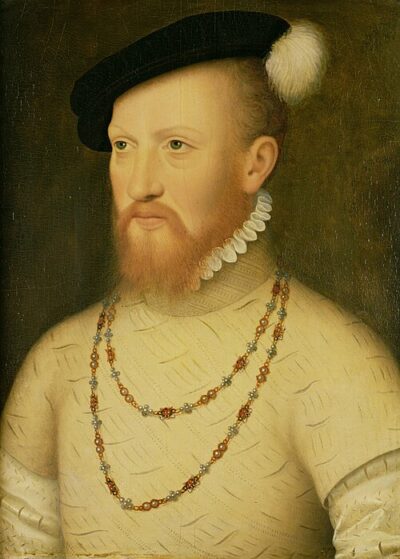
Edward Seymour, 1st Duke of Somerset was a Nobleman. Born 1500, in England. Died January 22, 1552, in Tower Hill. Positions held include Member of the Privy Council of the United Kingdom, Lord Protector (1547–1549) and Lord Lieutenant of Buckinghamshire (1551–1552). Awards include Knight of the Garter.
Facts
34 facts · 2 confirmed by two sources · 13 cited · 19 from one source
What’s different
- Born: we show 1500 (Confirmed). Wikidata also lists 1506
Where this comes from
Papalocal keeps its own record. It started from these sources; what each one said is kept here as it was copied, so a change on their side never changes this page by itself. Tap one to read its version.
What Wikidata says · copied November 16, 2026 · revision 2567933114
- Described as
- Nobleman
- Other names
- Edward, Duke Seymour, 1st Earl of Hertford Seymour, Protector Seymour, Duke Edward Seymour, Edward, 1st Duke of Somerset Seymour
- Born
- 1506 · 1 reference; 1500 · 2 references
- Died
- January 22, 1552 · 2 references
- Born in
- England
- Died in
- Tower Hill
- Buried in
- Church of St Peter ad Vincula, Tower Hamlets
- Cause of death
- decapitation
- Citizen of
- Kingdom of England
- Occupation
- noble family
- Positions held
- Member of the Privy Council of the United Kingdom; Lord Protector (1547–1549); Lord Lieutenant of Buckinghamshire (1551–1552); Lord Lieutenant of Berkshire (1551–1552); Earl Marshal (1547–1551); Lord Great Chamberlain (1543–1547)
- Awards
- Knight of the Garter (1541) · 1 reference
- Spouse
- Catherine Fillol · 1 reference; Anne Seymour, Duchess of Somerset · 2 references
- Children
- Sir Edward Seymour, of Berry Pomeroy; Edward Seymour · 1 reference; Margaret Seymour; Jane Seymour; John Seymour · 1 reference; Anne Dudley, Countess of Warwick · 3 references; Lady Mary Seymour · 1 reference; Lady Elizabeth Seymour · 1 reference; Lord Henry Seymour · 1 reference; unknown Seymour · 1 reference
- Father
- John Seymour · 1 reference
- Mother
- Margery Wentworth · 1 reference
- Siblings
- Elizabeth Seymour, Lady Cromwell · 1 reference; Jane Seymour · 1 reference; Thomas Seymour, 1st Baron Seymour of Sudeley · 1 reference; Henry Seymour
- Military rank
- field marshal
- Wikipedias with a page
- 36
Wikidata item Q163936 (wikidata.org/wiki/Q163936), public domain (CC0). Copied November 16, 2026.
What Wikipedia says · copied November 16, 2026 · revision 1385181568
Edward Seymour, 1st Duke of Somerset, 1st Earl of Hertford, 1st Viscount Beauchamp (1500 – 22 January 1552) was an English nobleman and politician who served as Lord Protector of England from 1547 to 1549 during the minority of his nephew King Edward VI. He was the eldest surviving brother of Queen Jane Seymour, the third wife of King Henry VIII and mother of King Edward VI.
Seymour grew rapidly in favour with Henry VIII following Jane's marriage to the king in 1536, and was subsequently made Earl of Hertford. On Henry's death in 1547, he was appointed protector by the Regency Council on the accession of the nine-year-old Edward VI. Rewarded with the title Duke of Somerset, Seymour became the effective ruler of England. Somerset continued Henry's military campaign against the Scots and achieved a sound victory at the Battle of Pinkie, but ultimately he was unable to maintain his position in Scotland. Domestically, Somerset pursued further reforms as an extension of the English Reformation, and in 1549 imposed the first Book of Common Prayer through the Act of Uniformity, offering a compromise between Protestant and Roman Catholic teachings. The unpopularity of Somerset's religious measures, along with agrarian grievances, resulted in unrest in England and provoked a series of uprisings (including the Prayer Book Rebellion and Kett's Rebellion). Costly wars and economic mismanagement brought the Crown to financial ruin, further undermining his government.
In October 1549, Somerset was forced out of power and imprisoned in the Tower of London by John Dudley, Earl of Warwick, and a group of privy councillors. He was later released and reconciled with Warwick (now Duke of Northumberland), but in 1551 Northumberland accused him of treason, and he was executed in January 1552. Until the 1970s historians had a highly positive view of Somerset, seeing him as a champion of political liberty and the common people, but since then he has also often been portrayed as an arrogant and inept ruler of the Tudor state.
- Born, in its opening lines
- 1500
- Died, in its opening lines
- January 22, 1552
From the Wikipedia article “Edward Seymour, 1st Duke of Somerset” (en.wikipedia.org/wiki/Edward_Seymour,_1st_Duke_of_Somerset), by its contributors, under CC BY-SA 4.0 (creativecommons.org/licenses/by-sa/4.0/). Copied November 16, 2026; not changed.
Confirmed Two sources agree. Cited One source, and it names where it got it. One source One source, without a reference of its own. Sources disagree The sources disagree. We show the best-supported value and keep theirs below.
