
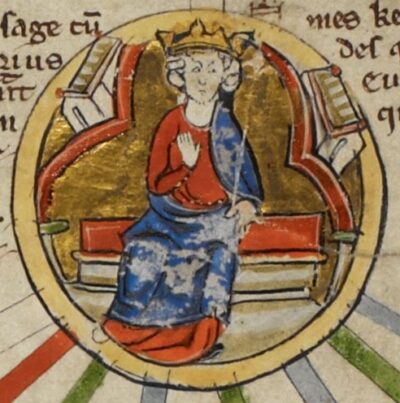
Edward the Elder
Edward the Elder was a king of the Anglo-Saxons (r. 899–924). Born June 874, in Wantage. Died July 17, 924, in Farndon. Positions held include king (899–924), monarch (918–924) and Monarch of England (899–924).
Facts
33 facts · 0 confirmed by two sources · 23 cited · 10 from one source
Where this comes from
Papalocal keeps its own record. It started from these sources; what each one said is kept here as it was copied, so a change on their side never changes this page by itself. Tap one to read its version.
What Wikidata says · copied November 16, 2026 · revision 2560363088
- Described as
- king of the Anglo-Saxons (r. 899–924)
- Other names
- Edward I, King Edward, Eadweard, King Eadweard the Elder, Eadweard, king of the Saxons, Eduuard, Edward, king of the Saxons, King Edward I the Elder, Eadweard, king of Wessex, Eadweard the Elder, Edward, king of Wessex, Eaduueard
- Born
- June 874 · 1 reference
- Died
- July 17, 924 · 2 references
- Born in
- Wantage
- Died in
- Farndon
- Buried in
- Winchester Cathedral
- Citizen of
- Kingdom of Wessex; England
- Occupation
- sovereign
- Positions held
- king (899–924); monarch (918–924); Monarch of England (899–924)
- Spouse
- Ecgwynn · 2 references; Ælfflæd, wife of Edward the Elder (901–) · 2 references; Eadgifu of Kent (920–) · 2 references
- Children
- Æthelstan · 2 references; Eadgifu of Wessex · 1 reference; Ælfweard of Wessex · 1 reference; Eadgyth · 1 reference; Edwin, son of Edward the Elder · 2 references; Edmund I · 1 reference; Edred of England · 2 references; Eadburh of Winchester · 2 references; Eadhild · 1 reference; Edith of Polesworth · 2 references; Alfred · 1 reference; Eadgifu · 2 references
- Father
- Alfred the Great · 1 reference
- Mother
- Ealhswith · 1 reference
- Siblings
- Ælfthryth, Countess of Flanders · 1 reference; Æthelgifu · 1 reference; Æthelweard · 1 reference; Æthelflæd · 1 reference; Ælfthryth · 1 reference
- Wikipedias with a page
- 60
Wikidata item Q187114 (wikidata.org/wiki/Q187114), public domain (CC0). Copied November 16, 2026.
What Wikipedia says · copied November 16, 2026 · revision 1380954108
Edward the Elder (870s? – 17 July 924) was King of the Anglo-Saxons from 899 until his death in 924. He was the elder son of Alfred the Great and his wife Ealhswith. When Edward succeeded to the throne, he had to defeat a challenge from his cousin Æthelwold, who had a strong claim to the throne as the son of Alfred's elder brother and predecessor, Æthelred I.
Alfred had succeeded Æthelred as king of Wessex in 871, and almost faced defeat against the Danish Vikings until his decisive victory at the Battle of Edington in 878. After the battle, the Vikings still ruled Northumbria, East Anglia and eastern Mercia, leaving only Wessex and western Mercia under Anglo-Saxon control. In the early 880s Æthelred, Lord of the Mercians, the ruler of western Mercia, accepted Alfred's lordship and married his daughter Æthelflæd, and around 886 Alfred adopted the new title King of the Anglo-Saxons as the ruler of all Anglo-Saxons not subject to Danish rule. Edward inherited the new title when Alfred died in 899.
In 910, a Mercian and West Saxon army inflicted a decisive defeat on an invading Northumbrian army, ending the threat from the northern Vikings. In the decade that followed, Edward conquered Viking-ruled southern England in partnership with his sister Æthelflæd, who had succeeded as Lady of the Mercians following the death of her husband in 911. Historians dispute how far Mercia was dominated by Wessex during this period, and after Æthelflæd's death in June 918, her daughter Ælfwynn briefly became second Lady of the Mercians, but in December Edward took her into Wessex and imposed direct rule on Mercia. By the end of the 910s he ruled Wessex, Mercia and East Anglia, and only Northumbria remained under Viking rule. In 924 he faced a Mercian and Welsh revolt at Chester, and after putting it down he died at Farndon in Cheshire on 17 July 924. He was succeeded by his eldest son, Æthelstan. Edward's two youngest sons later reigned as kings Edmund I and Eadred.
Edward was admired by medieval chroniclers, and in the view of William of Malmesbury, he was "much inferior to his father in the cultivation of letters" but "incomparably more glorious in the power of his rule". He was largely ignored by modern historians until the 1990s, and Nick Higham described him as "perhaps the most neglected of English kings", partly because few primary sources for his reign survive. His reputation rose in the late twentieth century and he is now seen as destroying the power of the Vikings in southern England while laying the foundations for a south-centred united English kingdom.
From the Wikipedia article “Edward the Elder” (en.wikipedia.org/wiki/Edward_the_Elder), by its contributors, under CC BY-SA 4.0 (creativecommons.org/licenses/by-sa/4.0/). Copied November 16, 2026; not changed.
Confirmed Two sources agree. Cited One source, and it names where it got it. One source One source, without a reference of its own. Sources disagree The sources disagree. We show the best-supported value and keep theirs below.
