
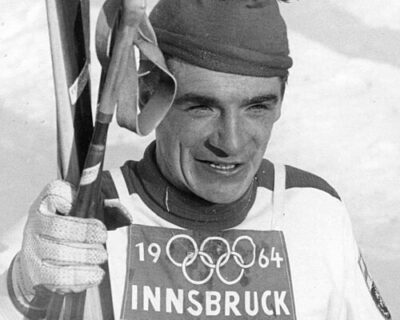
Eero Mäntyranta
Eero Mäntyranta was a Finnish cross-country skier. Born November 20, 1937, in Pello. Died December 30, 2013, in Oulu. Awards include Holmenkollen Medal.
Facts
10 facts · 2 confirmed by two sources · 2 cited · 6 from one source
Where this comes from
Papalocal keeps its own record. It started from these sources; what each one said is kept here as it was copied, so a change on their side never changes this page by itself. Tap one to read its version.
What Wikidata says · copied November 17, 2026 · revision 2568486139
- Described as
- Finnish cross-country skier
- Born
- November 20, 1937 · 4 references
- Died
- December 30, 2013 · 4 references
- Born in
- Pello
- Died in
- Oulu · 2 references
- Cause of death
- myocardial infarction
- Citizen of
- Finland
- Occupation
- cross-country skier · 1 reference
- Sport
- cross-country skiing
- Awards
- Holmenkollen Medal (1964)
- Height
- 1.70 m (5 ft 7 in)
- Wikipedias with a page
- 25
Wikidata item Q709064 (wikidata.org/wiki/Q709064), public domain (CC0). Copied November 17, 2026.
What Wikipedia says · copied November 17, 2026 · revision 1362075860
Eero Antero Mäntyranta (20 November 1937 – 30 December 2013) was one of the most successful Finnish cross-country skiers. He competed in four Winter Olympics (1960–1972) winning seven medals at three of them. His performance at the 1964 Winter Olympics earned him the nickname "Mister Seefeld", referring to the venue where the cross-country skiing and biathlon competitions took place. The Finnish Ministry of Education endowed him with the Pro Urheilu letter of recognition in 2000. There is also a museum centered on Mäntyranta in his birthplace of Pello.
- Born, in its opening lines
- November 20, 1937
- Died, in its opening lines
- December 30, 2013
From the Wikipedia article “Eero Mäntyranta” (en.wikipedia.org/wiki/Eero_Mäntyranta), by its contributors, under CC BY-SA 4.0 (creativecommons.org/licenses/by-sa/4.0/). Copied November 17, 2026; not changed.
Confirmed Two sources agree. Cited One source, and it names where it got it. One source One source, without a reference of its own. Sources disagree The sources disagree. We show the best-supported value and keep theirs below.
