
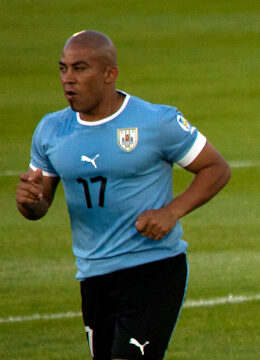
Egidio Arévalo Rios
Egidio Arévalo Rios is an Uruguayan footballer. Born January 1, 1982, in Paysandú. Teams include Palermo F.C. (2012–2013), Club de Fútbol Monterrey (2007–2008) and Danubio F.C. (2008).
Facts
22 facts · 1 confirmed by two sources · 0 cited · 21 from one source
Where this comes from
Papalocal keeps its own record. It started from these sources; what each one said is kept here as it was copied, so a change on their side never changes this page by itself. Tap one to read its version.
What Wikidata says · copied November 16, 2026 · revision 2568863621
- Described as
- Uruguayan footballer
- Other names
- Egidio Arevalo
- Born
- January 1, 1982 · 3 references
- Born in
- Paysandú
- Citizen of
- Uruguay; Mexico
- Occupation
- association football player
- Teams
- Palermo F.C. (2012–2013); Club de Fútbol Monterrey (2007–2008); Danubio F.C. (2008); Club Atlético Peñarol (2 times) (2006–2010); C.A. Bella Vista (2002–2006); Botafogo F.R. (2011); San Luis F.C. (2009); Tijuana opossums (2011–2014); Tigres UANL (2013–2016); Club Paysandú Bella Vista (2000–2001); Chicago Fire FC (2013); Club Atlético Morelia (2013–2014); Atlas F.C. (2015–); Uruguay Olympic football team (2012); Uruguay men's national football team (2006–)
- Sport
- association football
- Height
- 1.70 m (5 ft 7 in)
- Wikipedias with a page
- 33
Wikidata item Q315674 (wikidata.org/wiki/Q315674), public domain (CC0). Copied November 16, 2026.
What Wikipedia says · copied November 16, 2026 · revision 1382603921
Egidio Raúl Arévalo Ríos (Spanish pronunciation: [eˈxiðjo aˈɾeβalo ˈri.os]; born 1 January 1982), nicknamed El Cacha, is a Uruguayan former professional footballer who played as a defensive midfielder. He also holds Mexican citizenship.
- Born, in its opening lines
- January 1, 1982
From the Wikipedia article “Egidio Arévalo” (en.wikipedia.org/wiki/Egidio_Arévalo), by its contributors, under CC BY-SA 4.0 (creativecommons.org/licenses/by-sa/4.0/). Copied November 16, 2026; not changed.
Confirmed Two sources agree. Cited One source, and it names where it got it. One source One source, without a reference of its own. Sources disagree The sources disagree. We show the best-supported value and keep theirs below.
