
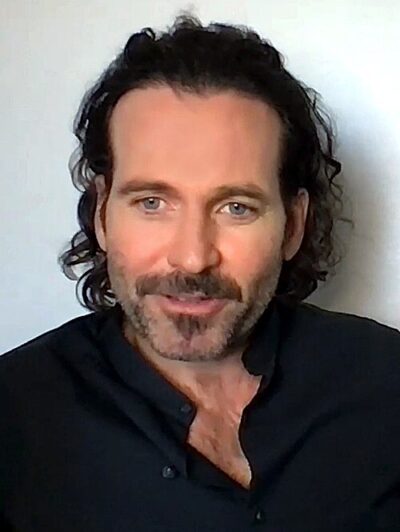
Eion Bailey
Eion Bailey is an American actor. Born June 8, 1976, in Santa Monica. Educated at American Academy of Dramatic Arts and Santa Barbara City College. Awards include Daytime Emmy Award.
Facts
12 facts · 1 confirmed by two sources · 2 cited · 9 from one source
Where this comes from
Papalocal keeps its own record. It started from these sources; what each one said is kept here as it was copied, so a change on their side never changes this page by itself. Tap one to read its version.
What Wikidata says · copied November 15, 2026 · revision 2552605509
- Described as
- American actor
- Other names
- Eion Francis Hamilton Bailey
- Born
- June 8, 1976 · 2 references
- Born in
- Santa Monica
- Name at birth
- Eion Francis Hamilton Bailey
- Citizen of
- United States
- Occupation
- actor · 1 reference; television actor; stage actor; film actor
- Education
- American Academy of Dramatic Arts (–1996) · 1 reference; Santa Barbara City College; Santa Ynez Valley Union High School
- Awards
- Daytime Emmy Award
- Wikipedias with a page
- 30
Wikidata item Q964006 (wikidata.org/wiki/Q964006), public domain (CC0). Copied November 15, 2026.
What Wikipedia says · copied November 15, 2026 · revision 1385408667
Eion Francis Hamilton Bailey ( EE-on; born June 8, 1976) is an American actor.
He starred as Jim Matthews in the MGM+ horror series From. He played Pvt. David Kenyon Webster in the HBO miniseries Band of Brothers and appeared in the films Fight Club, Center Stage, Mindhunters, and Sexual Life. He had a recurring role on the USA Network TV series Covert Affairs and played August (Pinocchio) in the ABC TV series Once Upon a Time. He also had a recurring role as Ray, a psychopathic killer in the CBS series Stalker. He played Teddy Weizak in the 2020 limited series The Stand.
- Born, in its opening lines
- June 8, 1976
From the Wikipedia article “Eion Bailey” (en.wikipedia.org/wiki/Eion_Bailey), by its contributors, under CC BY-SA 4.0 (creativecommons.org/licenses/by-sa/4.0/). Copied November 15, 2026; not changed.
Confirmed Two sources agree. Cited One source, and it names where it got it. One source One source, without a reference of its own. Sources disagree The sources disagree. We show the best-supported value and keep theirs below.
