
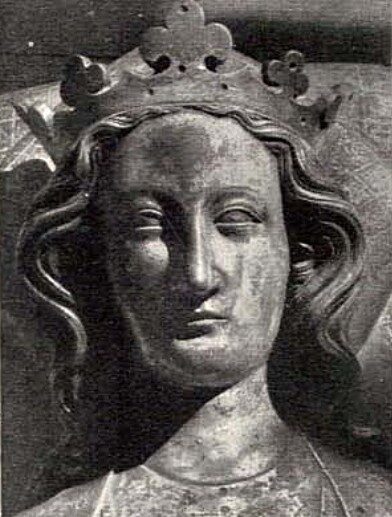
Eleanor of Castile
Eleanor of Castile was an Infanta of Castile and queen consort of England. Born 1241, in Crown of Castile. Died November 28, 1290, in Harby.
Facts
33 facts · 2 confirmed by two sources · 13 cited · 17 from one source · 1 where the sources disagree
What’s different
- Buried in: we show Westminster Abbey (Sources disagree). Wikidata also lists Lincoln Cathedral
Where this comes from
Papalocal keeps its own record. It started from these sources; what each one said is kept here as it was copied, so a change on their side never changes this page by itself. Tap one to read its version.
What Wikidata says · copied November 16, 2026 · revision 2569140789
- Described as
- Infanta of Castile and queen consort of England
- Other names
- Leonor of Castile, Leonor de Castilla
- Born
- 1241
- Died
- November 28, 1290
- Born in
- Crown of Castile
- Died in
- Harby · 1 reference
- Buried in
- Westminster Abbey · 1 reference; Lincoln Cathedral
- Citizen of
- Crown of Castile · 1 reference
- Occupation
- consort
- Spouse
- Edward I of England (1254–1290) · 4 references
- Children
- Henry of England; Eleanor of England, Countess of Bar · 2 references; Joan of Acre · 1 reference; Alphonso, Earl of Chester; Margaret of England · 1 reference; Mary of Woodstock · 2 references; Elizabeth of Rhuddlan · 3 references; Edward II of England · 1 reference; Alice of England · 2 references; Joan of England · 2 references; Juliana of England · 2 references; John of England · 2 references
- Father
- Ferdinand III of Castille · 2 references
- Mother
- Joan, Countess of Ponthieu · 2 references
- Siblings
- Infante Henry of Castile · 1 reference; Philip of Castile · 1 reference; Ferdinand, Count of Aumale · 1 reference; Manuel of Castile · 1 reference; Frederick of Castile · 1 reference; Sancho of Castile · 1 reference; Alfonso X of Castile and Leon · 1 reference; Luigi di Castiglia · 1 reference; Maria de Castilla; Berenguela de Castilla
- Religion
- Catholicism
- Wikipedias with a page
- 50
Wikidata item Q59604 (wikidata.org/wiki/Q59604), public domain (CC0). Copied November 16, 2026.
What Wikipedia says · copied November 16, 2026 · revision 1383897746
Eleanor of Castile (1241 – 28 November 1290) was Queen of England as the first wife of Edward I. She was educated at the Castilian court and also ruled as Countess of Ponthieu in her own right (suo jure) from 1279. After diplomatic efforts to secure her marriage and affirm English sovereignty over Gascony, 13-year-old Eleanor was married to Edward at the monastery of Las Huelgas, Burgos, on 1 November 1254. She is believed to have birthed a child not long after.
Fuller records of Eleanor's life with Edward start from the time of the Second Barons' War onwards, when Simon de Montfort's government imprisoned her in Westminster Palace. Eleanor took an active role in Edward's reign as he began to take control of Henry III's post-war government. The marriage was particularly close; Edward and Eleanor travelled together extensively, including the Ninth Crusade, during which Edward was wounded at Acre. Eleanor was capable of influencing politics but died too young to have much effect.
In her lifetime, Eleanor was disliked for her property dealings; she bought up vast lands such as Leeds Castle from the middling landed classes after they went into arrears on loan repayments to Jewish moneylenders, and the Crown forced them to sell their bonds. These transactions associated Eleanor with the abuse of usury and the supposed exploitation of Jews, bringing her into conflict with the church. She profited from the hanging of over 300 Jewish alleged coin clippers and after the expulsion of the Jews in 1290, she gifted the former Canterbury Synagogue to her tailor. Eleanor died at Harby near Lincoln in late 1290; following her death, Edward built a stone cross at each stopping place on the journey to London, ending at Charing Cross, known as Eleanor crosses. This series of monuments may have included the renovated tomb of Little St Hugh – who was believed to have been ritually murdered by Jews – to bolster her reputation as an opponent of Jewish criminality.
Eleanor exerted a strong cultural influence. She was a keen patron of literature and encouraged the use of tapestries, carpets and tableware in the Spanish style, as well as innovative garden designs. She was a generous patron of the Dominican friars, founding priories in England, and supporting their work at Oxford and Cambridge universities. Notwithstanding the sources of her wealth, Eleanor's financial independence had a lasting impact on the institutional standing of English queens, establishing their future independence of action. After her death, Eleanor's reputation was shaped by conflicting fictitious accounts – both positive and negative – portraying her as either the dedicated companion of Edward I or as a scheming Spaniard. These accounts influenced the fate of the Eleanor crosses, for which she is probably best known today. Historians have generally neglected Eleanor and her reign as a topic of serious study, but she has received more attention since the 1980s.
- Born, in its opening lines
- 1241
- Died, in its opening lines
- November 28, 1290
From the Wikipedia article “Eleanor of Castile” (en.wikipedia.org/wiki/Eleanor_of_Castile), by its contributors, under CC BY-SA 4.0 (creativecommons.org/licenses/by-sa/4.0/). Copied November 16, 2026; not changed.
Confirmed Two sources agree. Cited One source, and it names where it got it. One source One source, without a reference of its own. Sources disagree The sources disagree. We show the best-supported value and keep theirs below.
