
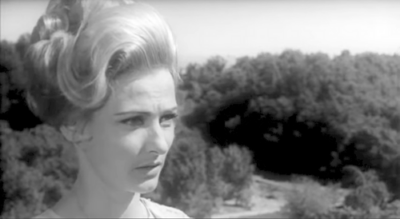
Elga Andersen
Elga Andersen was a German actress and singer. Born February 2, 1935, in Dortmund. Died December 7, 1994, in New York City.
Facts
16 facts · 2 confirmed by two sources · 4 cited · 10 from one source
Where this comes from
Papalocal keeps its own record. It started from these sources; what each one said is kept here as it was copied, so a change on their side never changes this page by itself. Tap one to read its version.
What Wikidata says · copied November 18, 2026 · revision 2568960773
- Described as
- German actress and singer (1935–1994)
- Born
- February 2, 1935 · 2 references
- Died
- December 7, 1994 · 2 references
- Born in
- Dortmund · 1 reference
- Died in
- New York City · 1 reference
- Buried in
- SS Andrea Doria · 1 reference
- Cause of death
- cancer
- Citizen of
- Germany
- Occupation
- actor · 1 reference; singer; model; film actor; film producer · 1 reference
- Instrument
- voice
- Record label
- Fontana Records; Philips Records
- Spouse
- Peter Gimbel · 1 reference
- Wikipedias with a page
- 21
Wikidata item Q76399 (wikidata.org/wiki/Q76399), public domain (CC0). Copied November 18, 2026.
What Wikipedia says · copied November 18, 2026 · revision 1372708640
Elga Andersen (née Helga Hymen or Hymmen) (2 February 1935 – 7 December 1994) was a German actress and singer. She starred in more than one dozen French films in the 1950s and 1960s and also debuted as a recording artist in the 1950s. She performed the songs "Treu sein" and "Sündenlied" in the 1961 film The Guns of Navarone, and co-starred in the 1971 Steve McQueen film Le Mans. Together with her second husband, Peter Gimbel, she embarked on a 1981 diving expedition of the sunken SS Andrea Doria.
- Born, in its opening lines
- February 2, 1935
- Died, in its opening lines
- December 7, 1994
From the Wikipedia article “Elga Andersen” (en.wikipedia.org/wiki/Elga_Andersen), by its contributors, under CC BY-SA 4.0 (creativecommons.org/licenses/by-sa/4.0/). Copied November 18, 2026; not changed.
Confirmed Two sources agree. Cited One source, and it names where it got it. One source One source, without a reference of its own. Sources disagree The sources disagree. We show the best-supported value and keep theirs below.
