
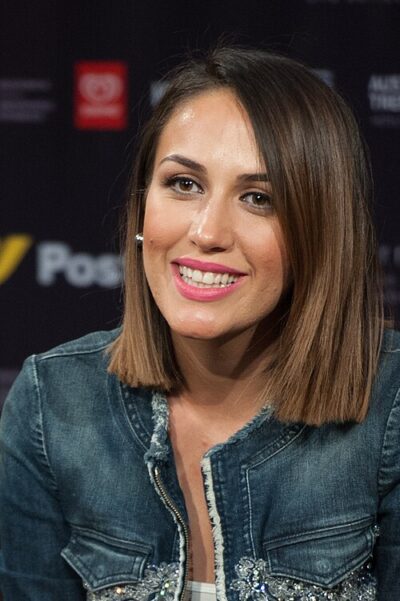
Elhaida Dani is an Albanian singer. Born February 17, 1993, in Shkodër.
Facts
12 facts · 1 confirmed by two sources · 0 cited · 11 from one source
Where this comes from
Papalocal keeps its own record. It started from these sources; what each one said is kept here as it was copied, so a change on their side never changes this page by itself. Tap one to read its version.
What Wikidata says · copied November 16, 2026 · revision 2533404743
- Described as
- Albanian singer
- Born
- February 17, 1993 · 1 reference
- Born in
- Shkodër
- Citizen of
- Albania
- Occupation
- singer
- Genre
- pop music; rhythm and blues; soul
- Instrument
- piano; voice
- Record label
- Universal Music Group
- Religion
- Islam
- Website
- http://elhaidadani93.com/
- Wikipedias with a page
- 35
Wikidata item Q10481367 (wikidata.org/wiki/Q10481367), public domain (CC0). Copied November 16, 2026.
What Wikipedia says · copied November 16, 2026 · revision 1379244116
Elhaida Dani (Albanian: [ɛlˈhajda daˈni]; born 17 February 1993) is an Albanian singer-songwriter. Born and raised in Shkodër, Dani performed in diverse singing competitions and started to play piano as a child. She rose to national recognition in the Albanian-speaking Balkans, after her victories at Star Academy Albania, Top Fest and Festivali i Këngës. In Italy, she is also prominent for being the winner of the first series of The Voice of Italy. Dani represented Albania in the Eurovision Song Contest 2015 with the song "I'm Alive", after she won the 53rd edition of Festivali i Këngës. She participated in Kënga Magjike for the first time in 2017 with the song "E Ngrirë" whereas she finished second. She rose again great popularity in Italy as well as in France upon her international acting debut in the musical of Notre-Dame de Paris.
- Born, in its opening lines
- February 17, 1993
From the Wikipedia article “Elhaida Dani” (en.wikipedia.org/wiki/Elhaida_Dani), by its contributors, under CC BY-SA 4.0 (creativecommons.org/licenses/by-sa/4.0/). Copied November 16, 2026; not changed.
Confirmed Two sources agree. Cited One source, and it names where it got it. One source One source, without a reference of its own. Sources disagree The sources disagree. We show the best-supported value and keep theirs below.
