
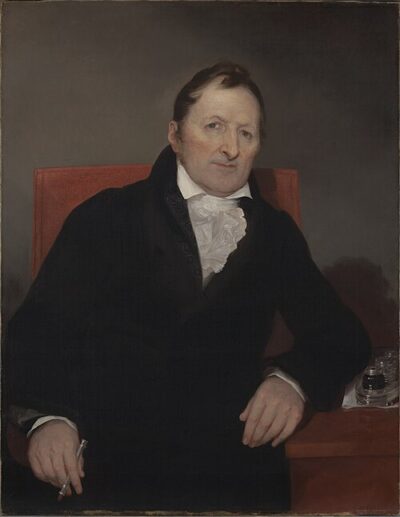
Eli Whitney
Eli Whitney was an American inventor. Born December 8, 1765, in Westborough. Died January 8, 1825, in New Haven. Educated at Yale College and Leicester Academy. Awards include National Inventors Hall of Fame and Machine Tool Hall of Fame.
Facts
23 facts · 2 confirmed by two sources · 12 cited · 9 from one source
Where this comes from
Papalocal keeps its own record. It started from these sources; what each one said is kept here as it was copied, so a change on their side never changes this page by itself. Tap one to read its version.
What Wikidata says · copied November 13, 2026 · revision 2567704943
- Described as
- American inventor (1765-1825)
- Other names
- Eli Whitney Jr.
- Born
- December 8, 1765 · 7 references
- Died
- January 8, 1825 · 6 references
- Born in
- Westborough
- Died in
- New Haven · 1 reference
- Buried in
- Grove Street Cemetery · 1 reference
- Cause of death
- peritoneum cancer
- Citizen of
- United States
- Occupation
- entrepreneur · 1 reference; inventor · 1 reference; engineer; tax collector; politician · 1 reference; mechanic · 1 reference
- Education
- Yale College; Leicester Academy
- Member of
- Phi Beta Kappa Society
- Awards
- National Inventors Hall of Fame (1974) · 1 reference; Machine Tool Hall of Fame (1998) · 1 reference
- Spouse
- Henrietta Frances Edwards Whitney · 1 reference
- Children
- Eli Whitney Jr. · 1 reference
- Father
- Eli Whitney · 1 reference
- Mother
- Elizabeth Fay · 1 reference
- Siblings
- Elizabeth Fay Whitney
- Wikipedias with a page
- 48
Wikidata item Q280930 (wikidata.org/wiki/Q280930), public domain (CC0). Copied November 13, 2026.
What Wikipedia says · copied November 13, 2026 · revision 1372573496
Eli Whitney Jr. (December 8, 1765 – January 8, 1825) was an American inventor, widely known for inventing the cotton gin in 1793, one of the key inventions of the Industrial Revolution that shaped the economy of the Antebellum South. Whitney's invention made upland short cotton into a profitable crop, which strengthened the economic foundation of slavery in the United States and prolonged the institution. Despite the social and economic impact of his invention, Whitney lost much of his profits in legal battles over patent infringement for the cotton gin. Thereafter, he turned his attention to securing contracts with the government in the manufacture of muskets for the newly formed United States Army. He continued making arms and inventing until his death in 1825.
- Born, in its opening lines
- December 8, 1765
- Died, in its opening lines
- January 8, 1825
From the Wikipedia article “Eli Whitney” (en.wikipedia.org/wiki/Eli_Whitney), by its contributors, under CC BY-SA 4.0 (creativecommons.org/licenses/by-sa/4.0/). Copied November 13, 2026; not changed.
Confirmed Two sources agree. Cited One source, and it names where it got it. One source One source, without a reference of its own. Sources disagree The sources disagree. We show the best-supported value and keep theirs below.
