
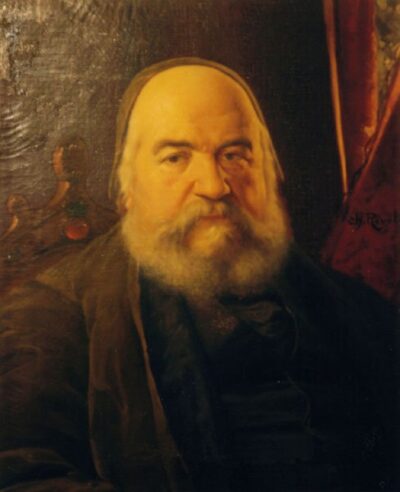
Eliphas Levi
Eliphas Levi was a French occult writer and poet. Born February 8, 1810, in Paris. Died May 31, 1875, in Paris. Known for Dogme et Rituel de la Haute Magie.
Facts
13 facts · 2 confirmed by two sources · 2 cited · 9 from one source
Where this comes from
Papalocal keeps its own record. It started from these sources; what each one said is kept here as it was copied, so a change on their side never changes this page by itself. Tap one to read its version.
What Wikidata says · copied November 16, 2026 · revision 2559085690
- Described as
- French occult writer and poet (1810–1875)
- Other names
- Eliphas Lévi, Alphonse Louis, Alphonse Louis Constant, Abbé Constant, Abbe Constant, Alphonse Constant, Éliphas Lévi
- Born
- February 8, 1810 · 7 references
- Died
- May 31, 1875 · 7 references
- Born in
- Paris · 1 reference
- Died in
- Paris · 1 reference
- Buried in
- Cimetière parisien d'Ivry
- Name at birth
- Alphonse Louis Constant
- Citizen of
- France
- Occupation
- occultist; non-fiction writer
- Known for
- Dogme et Rituel de la Haute Magie
- Field
- occultism
- Spouse
- Marie-Noémi Cadiot
- Religion
- Catholicism
- Wikipedias with a page
- 44
Wikidata item Q274681 (wikidata.org/wiki/Q274681), public domain (CC0). Copied November 16, 2026.
What Wikipedia says · copied November 16, 2026 · revision 1381574761
Éliphas Lévi Zahed, born Alphonse Louis Constant (8 February 1810 – 31 May 1875), was a French esotericist, occultist, poet, and writer. Initially pursuing an ecclesiastical career in the Catholic Church, he abandoned the priesthood in his mid-twenties and became a ceremonial magician. At the age of 40, he began professing knowledge of the occult. He wrote over 20 books on magic, Kabbalah, alchemical studies, and occultism.
The pen name "Éliphas Lévi" was an adaptation of his given names "Alphonse Louis" into Hebrew. Levi gained renown as an original thinker and writer, his works attracting attention in Paris and London among esotericists and artists of romantic or symbolist inspiration. He left the Grand Orient de France (the French Masonic organization that originated Continental Freemasonry) in the belief that the original meanings of its symbols and rituals had been lost. "I ceased being a freemason, at once, because the Freemasons, excommunicated by the Pope, did not believe in tolerating Catholicism ... [and] the essence of Freemasonry is the tolerance of all beliefs."
Many authors influenced Levi's political, occultic and literary development, such as the French monarchist Joseph de Maistre (whom he quotes in many parts of his Dogme et Rituel de la Haute Magie), Paracelsus, Robert Fludd, Swedenborg, Fabre d'Olivet, the Rosicrucians, Plato, Raymond Lull, and other esotericists.
- Born, in its opening lines
- February 8, 1810
- Died, in its opening lines
- May 31, 1875
From the Wikipedia article “Éliphas Lévi” (en.wikipedia.org/wiki/Éliphas_Lévi), by its contributors, under CC BY-SA 4.0 (creativecommons.org/licenses/by-sa/4.0/). Copied November 16, 2026; not changed.
Confirmed Two sources agree. Cited One source, and it names where it got it. One source One source, without a reference of its own. Sources disagree The sources disagree. We show the best-supported value and keep theirs below.
