
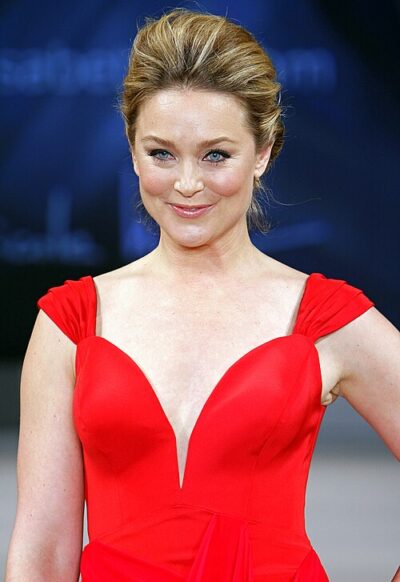
Elisabeth Röhm
Elisabeth Röhm is a German-American actress, producer, and director. Born April 28, 1973, in Düsseldorf. Educated at Sarah Lawrence College and St. Andrew's-Sewanee School.
Facts
9 facts · 1 confirmed by two sources · 5 cited · 3 from one source
Where this comes from
Papalocal keeps its own record. It started from these sources; what each one said is kept here as it was copied, so a change on their side never changes this page by itself. Tap one to read its version.
What Wikidata says · copied November 15, 2026 · revision 2569133960
- Described as
- German-American actress, producer, and director (born 1973)
- Born
- April 28, 1973
- Born in
- Düsseldorf · 1 reference
- Citizen of
- United States; Germany · 1 reference
- Occupation
- television actor · 1 reference; film actor; film director · 1 reference
- Education
- Sarah Lawrence College · 1 reference; St. Andrew's-Sewanee School · 1 reference
- Wikipedias with a page
- 27
Wikidata item Q62681 (wikidata.org/wiki/Q62681), public domain (CC0). Copied November 15, 2026.
What Wikipedia says · copied November 15, 2026 · revision 1383091144
Elisabeth Röhm ( "Rame" or "rem"; German: [ˈʁøːm]; born April 28, 1973) is an American television and film actress and director. She is best known for playing Kate Lockley in the television series Angel from 1999 to 2001 and Serena Southerlyn in the television series Law & Order from 2001 to 2005.
She has also appeared in films such as Miss Congeniality 2: Armed and Fabulous (2005), American Hustle (2013), Joy (2015), Seduced (2016), Once Upon a Time in Venice (2017), The Tribes of Palos Verdes (2017) and Bombshell (2019).
Röhm made her directorial debut with the Lifetime film Girl in the Basement (2021).
- Born, in its opening lines
- April 28, 1973
From the Wikipedia article “Elisabeth Röhm” (en.wikipedia.org/wiki/Elisabeth_Röhm), by its contributors, under CC BY-SA 4.0 (creativecommons.org/licenses/by-sa/4.0/). Copied November 15, 2026; not changed.
Confirmed Two sources agree. Cited One source, and it names where it got it. One source One source, without a reference of its own. Sources disagree The sources disagree. We show the best-supported value and keep theirs below.
