
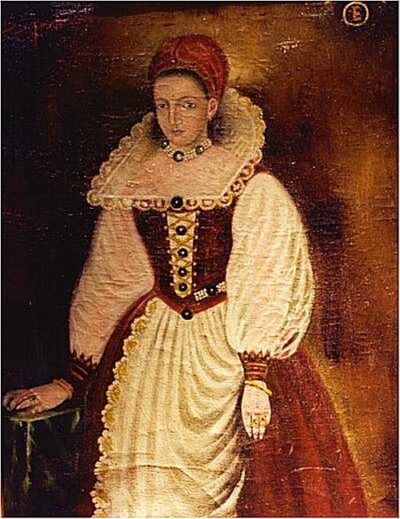
Elizabeth Báthory was a Hungarian countess. Born August 7, 1560, in Nyírbátor. Died August 21, 1614, in Čachtice Castle.
Facts
14 facts · 2 confirmed by two sources · 5 cited · 7 from one source
Where this comes from
Papalocal keeps its own record. It started from these sources; what each one said is kept here as it was copied, so a change on their side never changes this page by itself. Tap one to read its version.
What Wikidata says · copied November 16, 2026 · revision 2567779585
- Described as
- Hungarian countess
- Other names
- The Blood Countess, Erzsebet Bathory, Elizabeth Bathory, Erzsébet Báthory, Alžbeta Bátoriová, Alzbeta Batoriova, Elizabeth Bathori
- Born
- August 7, 1560 · 1 reference
- Died
- August 21, 1614 · 2 references
- Born in
- Nyírbátor · 1 reference
- Died in
- Čachtice Castle · 1 reference
- Citizen of
- Kingdom of Hungary
- Occupation
- land owner; aristocrat
- Spouse
- Ferenc II Nádasdy · 1 reference
- Children
- Paul Nádasdy-Fogaras · 1 reference; Katalin, Gräfin Nádasdy de Nádasd et Fogarasföld · 1 reference
- Father
- George Báthory
- Mother
- Anna Báthory
- Siblings
- Stephen Báthory
- Lived in
- Čachtice Castle · 1 reference
- Wikipedias with a page
- 64
Wikidata item Q170846 (wikidata.org/wiki/Q170846), public domain (CC0). Copied November 16, 2026.
What Wikipedia says · copied November 16, 2026 · revision 1385833618
Countess Elizabeth Báthory of Ecsed (Hungarian: Báthory Erzsébet, pronounced [ˈbaːtori ˈɛrʒeːbɛt]; Slovak: Alžbeta Bátoriová; 7 August 1560 – 21 August 1614) was a Hungarian noblewoman, aristocrat, and alleged serial killer from the powerful House of Báthory, which counted among its members several palatines of the Kingdom of Hungary, voivodes and princes of Transylvania within the lands of the Hungarian Crown, as well as a king of Poland. She was the wife of Hungarian nobleman and influential politician Count Ferenc Nádasdy of the House of Nádasdy. Báthory and four of her servants were accused of torturing and killing hundreds of girls and women from 1590 to 1610. Báthory and her cohorts were charged for 80 counts of murder and were convicted. Her servants were put on trial and executed, whereas Báthory was imprisoned within the Castle of Csejte, Hungary (now Čachtice, Slovakia) until she died in her sleep in 1614.
According to scholars such as Michael Farin, the accusations against Báthory were supported by testimony from more than 300 individuals, some of whom described physical evidence and the presence of mutilated dead, dying and imprisoned girls found at the time of her arrest. Other scholars suggest that the accusations were politically motivated spectacle to destroy her family's influence in the region, which was considered a threat to the political interests of her neighbours, including the Habsburg Monarchy.
Stories about Báthory quickly became part of national folklore. Legends describing her vampiric tendencies, such as the tale that she bathed in the blood of virgins to retain her youth, were based on rumours and only recorded as supposedly factual over a century after her death. Although these stories were repeated by at least three historians in the eighteenth and nineteenth centuries, they are considered unreliable by modern historians. Some insist that Elizabeth's story inspired Bram Stoker's novel Dracula (1897), although Stoker's notes on the novel provided no direct evidence to support this hypothesis. Nicknames and literary epithets attributed to her include Blood Countess and Countess Dracula.
- Born, in its opening lines
- August 7, 1560
- Died, in its opening lines
- August 21, 1614
From the Wikipedia article “Elizabeth Báthory” (en.wikipedia.org/wiki/Elizabeth_Báthory), by its contributors, under CC BY-SA 4.0 (creativecommons.org/licenses/by-sa/4.0/). Copied November 16, 2026; not changed.
Confirmed Two sources agree. Cited One source, and it names where it got it. One source One source, without a reference of its own. Sources disagree The sources disagree. We show the best-supported value and keep theirs below.
