
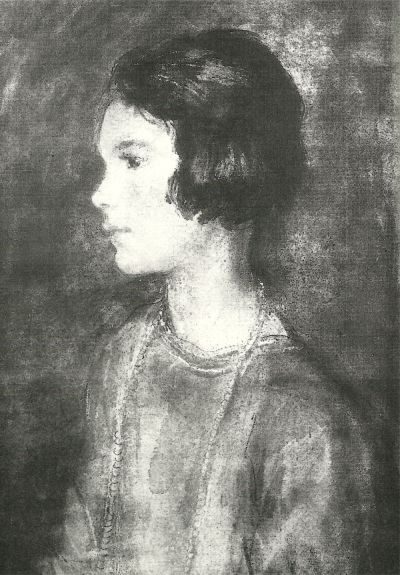
Elizabeth David
Elizabeth David was a British cookery writer. Born December 26, 1913, in Folkington. Died May 22, 1992, in London. Educated at College of Sorbonne. Awards include Commander of the Order of the British Empire and Fellow of the Royal Society of Literature.
Facts
16 facts · 2 confirmed by two sources · 4 cited · 10 from one source
Where this comes from
Papalocal keeps its own record. It started from these sources; what each one said is kept here as it was copied, so a change on their side never changes this page by itself. Tap one to read its version.
What Wikidata says · copied November 18, 2026 · revision 2566829186
- Described as
- British cookery writer (1913–1992)
- Other names
- Elizabeth Gwynne
- Born
- December 26, 1913 · 4 references
- Died
- May 22, 1992 · 4 references
- Born in
- Folkington
- Died in
- London · 1 reference
- Name at birth
- Elizabeth Gwynne
- Citizen of
- United Kingdom
- Occupation
- chef; cookbook writer; cook · 1 reference; author · 1 reference
- Education
- College of Sorbonne
- Member of
- Royal Society of Literature
- Awards
- Commander of the Order of the British Empire; Fellow of the Royal Society of Literature
- Father
- Rupert Gwynne · 1 reference
- Mother
- Stella Ridley
- Wikipedias with a page
- 23
Wikidata item Q4944293 (wikidata.org/wiki/Q4944293), public domain (CC0). Copied November 18, 2026.
What Wikipedia says · copied November 18, 2026 · revision 1383502565
Elizabeth David (née Gwynne, 26 December 1913 – 22 May 1992) was a British cookery writer. In the mid-20th century she strongly influenced the revitalisation of home cookery in her native country and beyond with articles and books about European cuisines and traditional British dishes.
Born to an upper-class family, David rebelled against social norms of the day. In the 1930s she studied art in Paris, became an actress, and ran off with a married man with whom she sailed in a small boat to Italy, where their boat was confiscated. They reached Greece, where they were nearly trapped by the German invasion in 1941, but escaped to Egypt, where they parted. She then worked for the British government, running a library in Cairo. While there she married, but she and her husband separated soon after and subsequently divorced.
In 1946 David returned to England, where food rationing imposed during the Second World War remained in force. Dismayed by the contrast between the bad food served in Britain and the simple, excellent food to which she had become accustomed in France, Greece and Egypt, she began to write magazine articles about Mediterranean cooking. They attracted favourable attention, and in 1950, at the age of 36, she published A Book of Mediterranean Food. Her recipes called for ingredients such as aubergines, basil, figs, garlic, olive oil and saffron, which at the time were scarcely available in Britain. Books on French, Italian and, later, English cuisine followed. By the 1960s David was a major influence on British cooking. She was deeply hostile to anything second-rate, to over-elaborate cooking, and bogus substitutes for classic dishes and ingredients. In 1965 she opened a shop selling kitchen equipment, which continued to trade under her name after she left it in 1973.
David's reputation rests on her articles and her books, which have been continually reprinted. Between 1950 and 1984 she published eight books; after her death her literary executor completed a further four that she had planned and worked on. David's influence on British cooking extended to professional as well as domestic cooks, and chefs and restaurateurs of later generations such as Terence Conran, Simon Hopkinson, Prue Leith, Jamie Oliver, Tom Parker Bowles and Rick Stein have acknowledged her importance to them. In the US, cooks and writers including Julia Child, Richard Olney and Alice Waters have written of her influence.
- Born, in its opening lines
- December 26, 1913
- Died, in its opening lines
- May 22, 1992
From the Wikipedia article “Elizabeth David” (en.wikipedia.org/wiki/Elizabeth_David), by its contributors, under CC BY-SA 4.0 (creativecommons.org/licenses/by-sa/4.0/). Copied November 18, 2026; not changed.
Confirmed Two sources agree. Cited One source, and it names where it got it. One source One source, without a reference of its own. Sources disagree The sources disagree. We show the best-supported value and keep theirs below.
