
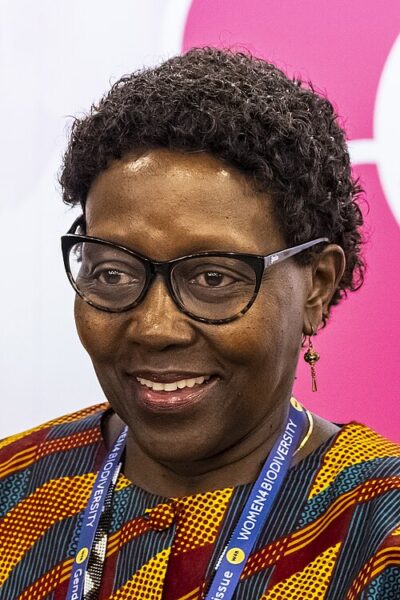
Elizabeth Maruma Mrema
Elizabeth Maruma Mrema is a Tanzanian biodiversity leader and lawyer. Born January 5, 1957, in Moshi Municipal District. Educated at University of Dar es Salaam and Dalhousie University. Awards include Kew International Medal.
Facts
11 facts · 0 confirmed by two sources · 7 cited · 4 from one source
Where this comes from
Papalocal keeps its own record. It started from these sources; what each one said is kept here as it was copied, so a change on their side never changes this page by itself. Tap one to read its version.
What Wikidata says · copied November 18, 2026 · revision 2540943526
- Described as
- Tanzanian biodiversity leader and lawyer
- Other names
- Elizabeth M. Mrema, Elizabeth Mrema
- Born
- January 5, 1957 · 1 reference
- Born in
- Moshi Municipal District · 1 reference
- Citizen of
- Tanzania · 1 reference
- Occupation
- civil servant · 1 reference; lawyer · 1 reference
- Worked for
- United Nations Environment Programme
- Education
- University of Dar es Salaam · 1 reference; Dalhousie University; Centre for Foreign Relations
- Awards
- Kew International Medal · 1 reference
- Field
- environmental law
- Wikipedias with a page
- 20
Wikidata item Q89678372 (wikidata.org/wiki/Q89678372), public domain (CC0). Copied November 18, 2026.
What Wikipedia says · copied November 18, 2026 · revision 1347719891
Elizabeth Maruma Mrema is a Tanzanian biodiversity leader and lawyer who has been serving as Deputy Executive Director of the United Nations Environment Programme (UNEP) since 2023, under the leadership of Executive Director Inger Andersen.
From 2020 to 2022, Mrema was executive secretary of the United Nations Convention on Biological Diversity (CBD); she was the first African woman to hold this role. She previously held numerous leadership positions within UNEP.
From the Wikipedia article “Elizabeth Mrema” (en.wikipedia.org/wiki/Elizabeth_Mrema), by its contributors, under CC BY-SA 4.0 (creativecommons.org/licenses/by-sa/4.0/). Copied November 18, 2026; not changed.
Confirmed Two sources agree. Cited One source, and it names where it got it. One source One source, without a reference of its own. Sources disagree The sources disagree. We show the best-supported value and keep theirs below.
