
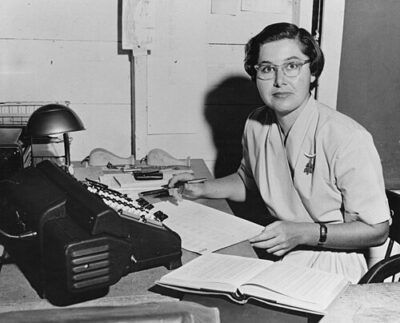
Elizabeth Roemer
Elizabeth Roemer was an American astronomer. Born September 4, 1929, in Oakland. Died April 8, 2016, in Tucson. Known for discoverer of asteroids. Educated at University of California, Berkeley.
Facts
11 facts · 2 confirmed by two sources · 0 cited · 9 from one source
Where this comes from
Papalocal keeps its own record. It started from these sources; what each one said is kept here as it was copied, so a change on their side never changes this page by itself. Tap one to read its version.
What Wikidata says · copied November 15, 2026 · revision 2558471838
- Described as
- American astronomer (1929–2016)
- Other names
- Elizabeth Pat Roemer, Pat Roemer
- Born
- September 4, 1929 · 1 reference
- Died
- April 8, 2016 · 1 reference
- Born in
- Oakland
- Died in
- Tucson
- Citizen of
- United States
- Occupation
- astronomer; university teacher
- Worked for
- University of Arizona
- Education
- University of California, Berkeley
- Member of
- International Astronomical Union
- Known for
- discoverer of asteroids
- Wikipedias with a page
- 28
Wikidata item Q240866 (wikidata.org/wiki/Q240866), public domain (CC0). Copied November 15, 2026.
What Wikipedia says · copied November 15, 2026 · revision 1368339365
Elizabeth "Pat" Roemer (September 4, 1929 – April 8, 2016) was an American astronomer and educator who specialized in astronomy with a particular focus on comets and minor planets. She was well known for the recovery of lost comets, as well as for her discovery of two asteroids, the co-discovery of Jupiter's moon Themisto, and for the asteroid 1657 Roemera that was named in her honor.
- Born, in its opening lines
- September 4, 1929
- Died, in its opening lines
- April 8, 2016
From the Wikipedia article “Elizabeth Roemer” (en.wikipedia.org/wiki/Elizabeth_Roemer), by its contributors, under CC BY-SA 4.0 (creativecommons.org/licenses/by-sa/4.0/). Copied November 15, 2026; not changed.
Confirmed Two sources agree. Cited One source, and it names where it got it. One source One source, without a reference of its own. Sources disagree The sources disagree. We show the best-supported value and keep theirs below.
