
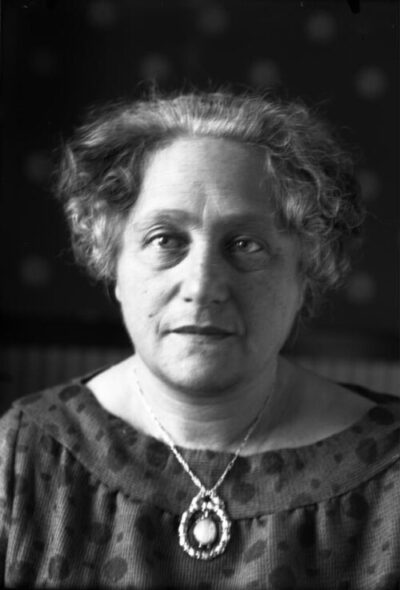
Elsa Einstein
Elsa Einstein was a second wife and cousin of Albert Einstein. Born January 18, 1876, in Hechingen. Died December 20, 1936, in Princeton.
Facts
12 facts · 2 confirmed by two sources · 6 cited · 4 from one source
Where this comes from
Papalocal keeps its own record. It started from these sources; what each one said is kept here as it was copied, so a change on their side never changes this page by itself. Tap one to read its version.
What Wikidata says · copied November 16, 2026 · revision 2547018495
- Described as
- second wife and cousin of Albert Einstein (1876-1936)
- Other names
- Else Einstein
- Born
- January 18, 1876 · 3 references
- Died
- December 20, 1936 · 3 references
- Born in
- Hechingen · 2 references
- Died in
- Princeton · 2 references
- Cause of death
- kidney failure
- Citizen of
- Germany · 1 reference
- Occupation
- politician · 1 reference
- Spouse
- Albert Einstein (1919–1936) · 1 reference
- Children
- Margot Einstein · 1 reference
- Father
- Rudolf Einstein
- Mother
- Fanny Koch
- Religion
- Judaism
- Wikipedias with a page
- 30
Wikidata item Q68761 (wikidata.org/wiki/Q68761), public domain (CC0). Copied November 16, 2026.
What Wikipedia says · copied November 16, 2026 · revision 1383205645
Elsa Einstein (18 January 1876 – 20 December 1936) was the second wife and cousin of Albert Einstein. Their mothers were sisters, making them maternal first cousins. The couple were also paternal second cousins (i.e. their fathers were first cousins). Born an Einstein, Elsa gave up the name when she took the surname of her first husband, Max Löwenthal; she and her daughters reverted to her maiden name after Elsa and Löwenthal's 1908 divorce.
- Born, in its opening lines
- January 18, 1876
- Died, in its opening lines
- December 20, 1936
From the Wikipedia article “Elsa Einstein” (en.wikipedia.org/wiki/Elsa_Einstein), by its contributors, under CC BY-SA 4.0 (creativecommons.org/licenses/by-sa/4.0/). Copied November 16, 2026; not changed.
Confirmed Two sources agree. Cited One source, and it names where it got it. One source One source, without a reference of its own. Sources disagree The sources disagree. We show the best-supported value and keep theirs below.
