
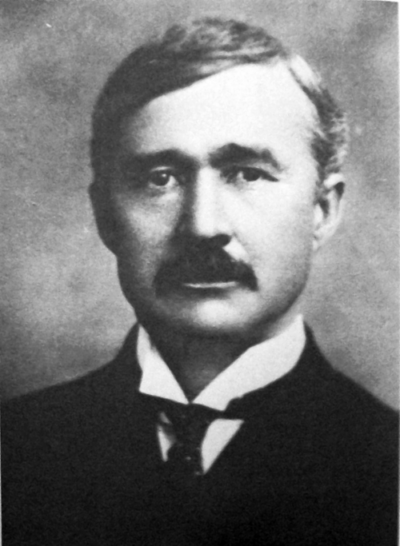
Elwood Haynes
Elwood Haynes was an American inventor. Born October 14, 1857, in Portland. Died April 13, 1925, in Kokomo. Educated at Worcester Polytechnic Institute and Johns Hopkins University. Awards include John Scott Award.
Facts
16 facts · 2 confirmed by two sources · 5 cited · 9 from one source
Where this comes from
Papalocal keeps its own record. It started from these sources; what each one said is kept here as it was copied, so a change on their side never changes this page by itself. Tap one to read its version.
What Wikidata says · copied November 18, 2026 · revision 2557868204
- Described as
- American inventor (1857–1925)
- Born
- October 14, 1857 · 3 references
- Died
- April 13, 1925 · 3 references
- Born in
- Portland · 1 reference
- Died in
- Kokomo
- Buried in
- Kokomo Memorial Park Cemetery · 1 reference
- Cause of death
- infectious disease
- Citizen of
- United States
- Occupation
- entrepreneur; inventor · 1 reference; racing automobile driver · 1 reference; writer · 1 reference
- Education
- Worcester Polytechnic Institute; Johns Hopkins University
- Sport
- auto racing
- Awards
- John Scott Award (1922) · 1 reference
- Lived in
- Elwood Haynes Museum · 1 reference
- Wikipedias with a page
- 14
Wikidata item Q942451 (wikidata.org/wiki/Q942451), public domain (CC0). Copied November 18, 2026.
What Wikipedia says · copied November 18, 2026 · revision 1354905982
Elwood Haynes (October 14, 1857 – April 13, 1925) was an American inventor, metallurgist, automotive pioneer, entrepreneur, and industrialist. He invented the metal alloy stellite and independently co-discovered martensitic stainless steel along with Englishman Harry Brearley in 1912 and designed one of the earliest automobiles made in the United States. He is recognized for having created the earliest American design that was feasible for mass production and, with the Apperson brothers, he formed the first company in the United States to produce automobiles profitably. He made many advances in the automotive industry.
Early in his career, while serving as a field superintendent at gas and oil companies during Indiana's gas boom, Haynes invented several devices important to the advance of the natural gas industry. When working for the Indiana Natural Gas and Oil Company, he oversaw the construction of the first long-distance natural gas pipeline in the United States, connecting Chicago with the Trenton Gas Field 150 miles (240 km) away. He began to formulate plans for a motorized vehicle in the early 1890s; he successfully road tested his first car, the Pioneer, on July 4, 1894—eight years after the first automobile was patented in Germany. He formed a partnership with Elmer and Edgar Apperson in 1896 to start Haynes-Apperson for the commercial production of automobiles. He renamed it Haynes Automobile Company in 1905, following the loss of his partners.
Working in his laboratory to develop new corrosion-resistant metals for auto parts, Haynes discovered that mixing tungsten with chromium, steel and iron resulted in the formation of strong and lightweight alloys that were impervious to corrosion, and could endure high temperatures.
In 1912, he formed Haynes Stellite Company to produce one of the new alloys, and received lucrative contracts during World War I, making Haynes a millionaire in 1916. He sold his patent for stainless steel to the American Stainless Steel Company in exchange for enough stock to gain a seat at the company's board of directors, a position he held for 12 years. He merged the Haynes Stellite company with Union Carbide in 1920. After passing through different owners, the company was renamed and is now called Haynes International. Haynes returned his focus to his automotive company, but in the economic recession of the 1920s the business went bankrupt and was liquidated.
An outspoken advocate of prohibition, he made substantial donations to the Prohibition Party and Indiana's prohibitionist leader Frank Hanly. Haynes ran an unsuccessful campaign in Indiana for the U.S. Senate in 1916 as a prohibition candidate and remained active in the party until prohibition became law. Later, he became a philanthropist and served two terms as president of the YMCA, five years on the Indiana Board of Education, and was an active member of the Presbyterian church. After his death from complications arising from influenza, his Kokomo mansion was converted into the Elwood Haynes Museum and is open to the public where many of his original inventions and automobiles are on display.
- Born, in its opening lines
- October 14, 1857
- Died, in its opening lines
- April 13, 1925
From the Wikipedia article “Elwood Haynes” (en.wikipedia.org/wiki/Elwood_Haynes), by its contributors, under CC BY-SA 4.0 (creativecommons.org/licenses/by-sa/4.0/). Copied November 18, 2026; not changed.
Confirmed Two sources agree. Cited One source, and it names where it got it. One source One source, without a reference of its own. Sources disagree The sources disagree. We show the best-supported value and keep theirs below.
