
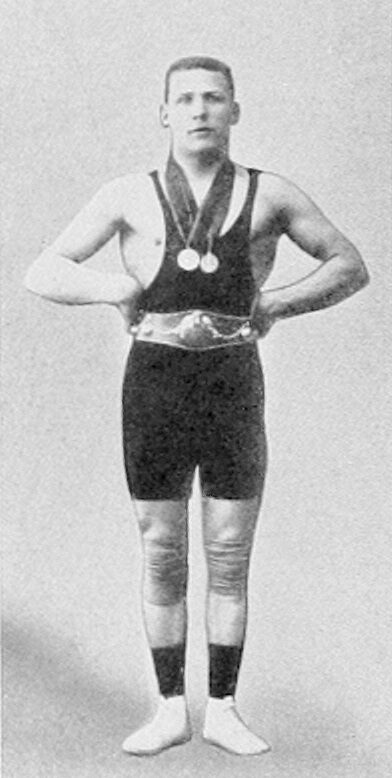
Emil Väre
Emil Väre was an Olympic wrestler. Born September 28, 1885, in Kärkölä. Died January 31, 1974, in Kärkölä. Awards include Knight First Class of the Order of the Lion of Finland.
Facts
8 facts · 2 confirmed by two sources · 3 cited · 3 from one source
Where this comes from
Papalocal keeps its own record. It started from these sources; what each one said is kept here as it was copied, so a change on their side never changes this page by itself. Tap one to read its version.
What Wikidata says · copied November 18, 2026 · revision 2568537923
- Described as
- Olympic wrestler (1885–1974)
- Born
- September 28, 1885 · 1 reference
- Died
- January 31, 1974
- Born in
- Kärkölä · 1 reference
- Died in
- Kärkölä · 1 reference
- Citizen of
- Finland
- Occupation
- amateur wrestler
- Sport
- amateur wrestling
- Awards
- Knight First Class of the Order of the Lion of Finland · 1 reference
- Wikipedias with a page
- 24
Wikidata item Q1295337 (wikidata.org/wiki/Q1295337), public domain (CC0). Copied November 18, 2026.
What Wikipedia says · copied November 18, 2026 · revision 1367170707
Emil Ernst Väre (28 September 1885 – 31 January 1974) was a Finnish wrestler who won the gold medals in the lightweight class at the 1912 and 1920 Summer Olympics.
Väre held the 1911 World title, the 1912 unofficial European title, and the 1909 and 1911 national titles. Between 1912 and 1916, he won all of his wrestling bouts. He retired after the 1920 Olympics to become a wrestling referee and coach. In the 1920s, he acted as president, general secretary, treasurer, and vice-president of his wrestling club Viipurin Voimailijat and was a board member of the Finnish Wrestling Federation.
- Born, in its opening lines
- September 28, 1885
- Died, in its opening lines
- January 31, 1974
From the Wikipedia article “Emil Väre” (en.wikipedia.org/wiki/Emil_Väre), by its contributors, under CC BY-SA 4.0 (creativecommons.org/licenses/by-sa/4.0/). Copied November 18, 2026; not changed.
Confirmed Two sources agree. Cited One source, and it names where it got it. One source One source, without a reference of its own. Sources disagree The sources disagree. We show the best-supported value and keep theirs below.
