
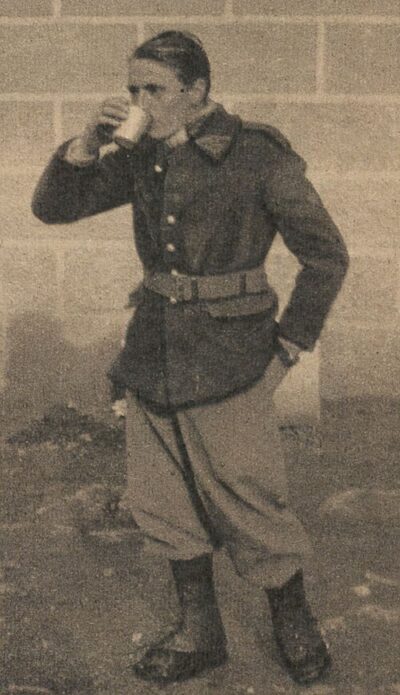
Émile Allais
Émile Allais was an alpine skier. Born February 25, 1912, in Megève. Died October 17, 2012, in Sallanches.
Facts
8 facts · 2 confirmed by two sources · 4 cited · 2 from one source
Where this comes from
Papalocal keeps its own record. It started from these sources; what each one said is kept here as it was copied, so a change on their side never changes this page by itself. Tap one to read its version.
What Wikidata says · copied November 18, 2026 · revision 2558289952
- Described as
- alpine skier (1912–2012)
- Other names
- Emile Allais
- Born
- February 25, 1912 · 5 references
- Died
- October 17, 2012 · 7 references
- Born in
- Megève · 1 reference
- Died in
- Sallanches · 1 reference
- Citizen of
- France
- Occupation
- alpine skier · 1 reference
- Sport
- alpine skiing · 1 reference
- Height
- 1.68 m (5 ft 6 in)
- Wikipedias with a page
- 21
Wikidata item Q274888 (wikidata.org/wiki/Q274888), public domain (CC0). Copied November 18, 2026.
What Wikipedia says · copied November 18, 2026 · revision 1383998631
Émile Allais (25 February 1912 – 17 October 2012) was a champion alpine ski racer from France; he won all three events at the 1937 world championships in Chamonix and the gold in the combined in 1938. Born in Megève, he was a dominant racer in the late 1930s and is considered to have been the first great French alpine skier.
Allais won the bronze medal in the combined (downhill and slalom), the only alpine medal event at the 1936 Winter Olympics in Garmisch, Germany. These Olympics were the first to award medals in alpine skiing. The previous year, he had won the silver medal in the downhill and combined at the 1935 world championships. In 1937 he was a triple world champion at Chamonix, France, winning all three events (downhill, slalom, and combined). The following year at Engelberg, Switzerland, he won the combined, and took silver in the downhill and slalom. He created the École Française de Ski which taught innovative methods of Anton Seelos (who was his trainer and instructor), characterised by parallel turns, controlling the speed by sideslipping, and turning by ruade (French: kick, back kick), i.e. kicking the backs of the skis up and pivoting on the tips while rotating the body in the direction of the turn. The École du Ski Français (ESF) is now the biggest Ski school in the world in terms of numbers of ski teachers, and is present in every single French ski resort, and even abroad.
After a spell in North and South America (Squaw Valley, California and Portillo, Chile) Allais held the post of technical director at Courchevel from 1954 to 1964, where he introduced many ideas from the U.S. regarding slope preparation and piste security. He later worked as a technical consultant for other resorts, notably La Plagne and Flaine. One of the Saulire couloirs at Courchevel is named after Allais.
As a consultant to Skis Rossignol, Allais helped to design the laminated-wood Olympic 41 ski (1941), and the first aluminum skis to win major ski races, the Métallais (1959) and Allais 60 (1960). The Olympic 41 later served as the basis of Rossignol's very successful Strato (1964).
In December 2005, 93-year-old Allais made the trip to the French Senate in Paris where he was honoured, along with a number of other ski instructors. His life has been all about skiing; he learned his skiing early, raced all over Europe, then coached the French Olympic ski team for seven years. Allais fought in World War II on skis, and even courted his wife at a ski meet. He turned 100 in February 2012.
Allais died after an illness in a hospital in Sallanches in the French Alps on 17 October 2012.
- Born, in its opening lines
- February 25, 1912
- Died, in its opening lines
- October 17, 2012
From the Wikipedia article “Émile Allais” (en.wikipedia.org/wiki/Émile_Allais), by its contributors, under CC BY-SA 4.0 (creativecommons.org/licenses/by-sa/4.0/). Copied November 18, 2026; not changed.
Confirmed Two sources agree. Cited One source, and it names where it got it. One source One source, without a reference of its own. Sources disagree The sources disagree. We show the best-supported value and keep theirs below.
