
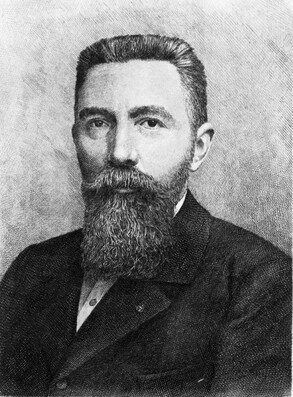
Émile Baudot
Émile Baudot was a French engineer. Born September 11, 1845, in Magneux. Died March 28, 1903, in Sceaux. Awards include Officer of the Legion of Honour, Knight's Cross of the Order of Franz Joseph and Knight of the Order of Saints Maurice and Lazarus.
Facts
13 facts · 2 confirmed by two sources · 2 cited · 9 from one source
Where this comes from
Papalocal keeps its own record. It started from these sources; what each one said is kept here as it was copied, so a change on their side never changes this page by itself. Tap one to read its version.
What Wikidata says · copied November 16, 2026 · revision 2567110604
- Described as
- French engineer (1845-1903)
- Other names
- Emile Baudot, Jean Maurice Émile Baudot, Jean-Maurice-Émile Baudot
- Born
- September 11, 1845 · 3 references
- Died
- March 28, 1903 · 2 references
- Born in
- Magneux
- Died in
- Sceaux · 1 reference
- Citizen of
- France
- Occupation
- inventor; electrical engineer; engineer · 1 reference
- Worked for
- Postes, télégraphes et téléphones
- Awards
- Officer of the Legion of Honour (1898); Knight's Cross of the Order of Franz Joseph; Knight of the Order of Saints Maurice and Lazarus
- Field
- telecommunications
- Wikipedias with a page
- 32
Wikidata item Q550192 (wikidata.org/wiki/Q550192), public domain (CC0). Copied November 16, 2026.
What Wikipedia says · copied November 16, 2026 · revision 1373475329
Jean-Maurice-Émile Baudot (French: [emil bodo]; 11 September 1845 – 28 March 1903) was a French telegraph engineer and inventor of the first means of digital communication Baudot code. He was one of the pioneers of telecommunications. He invented a multiplexed printing telegraph system that used his code and allowed multiple transmissions over a single line. The baud unit was named after him.
- Born, in its opening lines
- September 11, 1845
- Died, in its opening lines
- March 28, 1903
From the Wikipedia article “Émile Baudot” (en.wikipedia.org/wiki/Émile_Baudot), by its contributors, under CC BY-SA 4.0 (creativecommons.org/licenses/by-sa/4.0/). Copied November 16, 2026; not changed.
Confirmed Two sources agree. Cited One source, and it names where it got it. One source One source, without a reference of its own. Sources disagree The sources disagree. We show the best-supported value and keep theirs below.
