
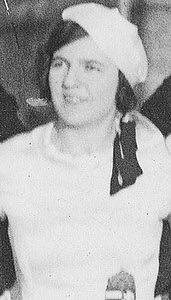
Emília Rotter
Emília Rotter was a Hungarian pair skater. Born September 8, 1906, in Budapest. Died January 27, 2003, in Budapest.
Facts
9 facts · 1 confirmed by two sources · 4 cited · 3 from one source · 1 where the sources disagree
What’s different
- Died: we show January 27, 2003 (Sources disagree). Wikipedia says January 28, 2003
Where this comes from
Papalocal keeps its own record. It started from these sources; what each one said is kept here as it was copied, so a change on their side never changes this page by itself. Tap one to read its version.
What Wikidata says · copied November 18, 2026 · revision 2567323653
- Described as
- Hungarian pair skater (1906–2003)
- Born
- September 8, 1906
- Died
- January 27, 2003 · 1 reference
- Born in
- Budapest · 1 reference
- Died in
- Budapest · 1 reference
- Buried in
- Nagymaros · 1 reference
- Citizen of
- Hungary
- Occupation
- figure skater · 1 reference
- Member of
- Budapesti Korcsolyázó Egylet
- Sport
- figure skating
- Wikipedias with a page
- 20
Wikidata item Q271584 (wikidata.org/wiki/Q271584), public domain (CC0). Copied November 18, 2026.
What Wikipedia says · copied November 18, 2026 · revision 1375082821
Emília Rotter (8 September 1906 in Budapest, Hungary – 28 January 2003) was a Hungarian pair skater.
With partner László Szollás she won the World Figure Skating Championship four times in five years (1931, 1933, 1934, and 1935), and were the 1932 World silver medalists. They were the 1934 European Champions and 1930 & 1931 silver medalists. They represented Hungary at the 1932 Winter Olympics and at the 1936 Winter Olympics, winning two bronze medals.
Rotter was Jewish, and was inducted into the International Jewish Sports Hall of Fame in 1995.
- Born, in its opening lines
- September 8, 1906
- Died, in its opening lines
- January 28, 2003
From the Wikipedia article “Emília Rotter” (en.wikipedia.org/wiki/Emília_Rotter), by its contributors, under CC BY-SA 4.0 (creativecommons.org/licenses/by-sa/4.0/). Copied November 18, 2026; not changed.
Confirmed Two sources agree. Cited One source, and it names where it got it. One source One source, without a reference of its own. Sources disagree The sources disagree. We show the best-supported value and keep theirs below.
