
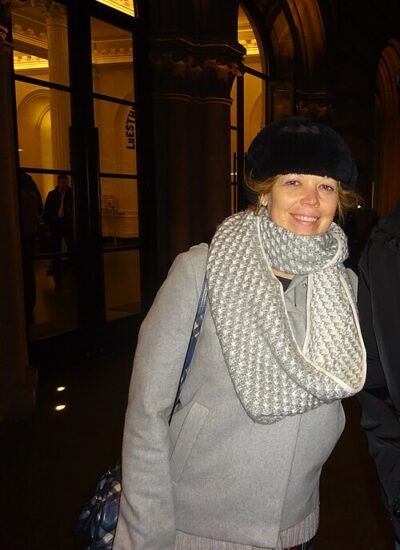
Emily Bergl
Emily Bergl is a British actress. Born April 25, 1975, in Milton Keynes. Educated at Grinnell College and Glenbrook South High School.
Facts
16 facts · 1 confirmed by two sources · 1 cited · 14 from one source
Where this comes from
Papalocal keeps its own record. It started from these sources; what each one said is kept here as it was copied, so a change on their side never changes this page by itself. Tap one to read its version.
What Wikidata says · copied November 16, 2026 · revision 2549674476
- Described as
- British actress
- Other names
- Anne Emily Bergl
- Born
- April 25, 1975 · 1 reference
- Born in
- Milton Keynes
- Name at birth
- Anne Emily Bergl
- Citizen of
- United Kingdom; United States
- Occupation
- actor · 1 reference; film actor; television actor; singer
- Education
- Grinnell College; Glenbrook South High School · 1 reference; HB Studio
- Member of
- Phi Beta Kappa Society
- Instrument
- voice
- Height
- 1.65 m (5 ft 5 in)
- Website
- http://www.emilybergl.net/
- Wikipedias with a page
- 24
Wikidata item Q240605 (wikidata.org/wiki/Q240605), public domain (CC0). Copied November 16, 2026.
What Wikipedia says · copied November 16, 2026 · revision 1379434572
Anne Emily Bergl (born 25 April 1975) is an English-born American actress. Bergl is known for her roles as Rachel Lang in the supernatural horror film The Rage: Carrie 2 (1999), Francie Jarvis on Gilmore Girls (2001–2003), Annie O'Donnell on the ABC series Men in Trees (2006–2008), Tammi Bryant on the TNT drama series Southland (2009–2013), Beth Young on Desperate Housewives (2010–2012), Sammi Slott on Shameless (2014–2015), Lilah Tanner on American Crime (2016–2017), and Tessie on The Marvelous Mrs. Maisel (2018–2023). She also performs as a cabaret singer.
- Born, in its opening lines
- April 25, 1975
From the Wikipedia article “Emily Bergl” (en.wikipedia.org/wiki/Emily_Bergl), by its contributors, under CC BY-SA 4.0 (creativecommons.org/licenses/by-sa/4.0/). Copied November 16, 2026; not changed.
Confirmed Two sources agree. Cited One source, and it names where it got it. One source One source, without a reference of its own. Sources disagree The sources disagree. We show the best-supported value and keep theirs below.
