
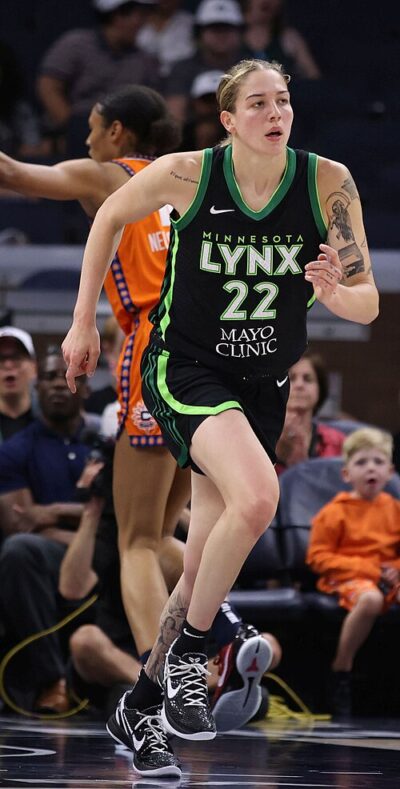
Emily Engstler is an American basketball player. Born May 1, 2000, in Queens. Teams include Syracuse Orange women's basketball. Educated at St. Francis Preparatory School and Syracuse University.
Facts
9 facts · 1 confirmed by two sources · 1 cited · 7 from one source
Where this comes from
Papalocal keeps its own record. It started from these sources; what each one said is kept here as it was copied, so a change on their side never changes this page by itself. Tap one to read its version.
What Wikidata says · copied November 20, 2026 · revision 2527814004
- Described as
- American basketball player (born 2000)
- Born
- May 1, 2000 · 1 reference
- Born in
- Queens
- Citizen of
- United States · 1 reference
- Occupation
- basketball player
- Education
- St. Francis Preparatory School; Syracuse University
- Teams
- Syracuse Orange women's basketball
- Sport
- basketball
- Height
- 1.85 m (6 ft 1 in) · 1 reference
- Wikipedias with a page
- 8
Wikidata item Q110587267 (wikidata.org/wiki/Q110587267), public domain (CC0). Copied November 20, 2026.
What Wikipedia says · copied November 20, 2026 · revision 1385811004
Emily Ann Engstler (born May 1, 2000) is an American professional basketball player for the Portland Fire of the Women's National Basketball Association (WNBA). She played college basketball for Syracuse during her first three years at the college level, then for Louisville, earning first-team All-ACC honors in her only season with the team. Engstler graduated from St. Francis Preparatory School in Queens, New York, where she was rated a five-star recruit by ESPN and named a McDonald's All-American. Selected fourth overall by the Indiana Fever in the 2022 WNBA draft, she has previously played for the Fever, the Minnesota Lynx, and the Washington Mystics.
- Born, in its opening lines
- May 1, 2000
From the Wikipedia article “Emily Engstler” (en.wikipedia.org/wiki/Emily_Engstler), by its contributors, under CC BY-SA 4.0 (creativecommons.org/licenses/by-sa/4.0/). Copied November 20, 2026; not changed.
Confirmed Two sources agree. Cited One source, and it names where it got it. One source One source, without a reference of its own. Sources disagree The sources disagree. We show the best-supported value and keep theirs below.
